Mastering the Art of the Roll Gybe in the Optimist
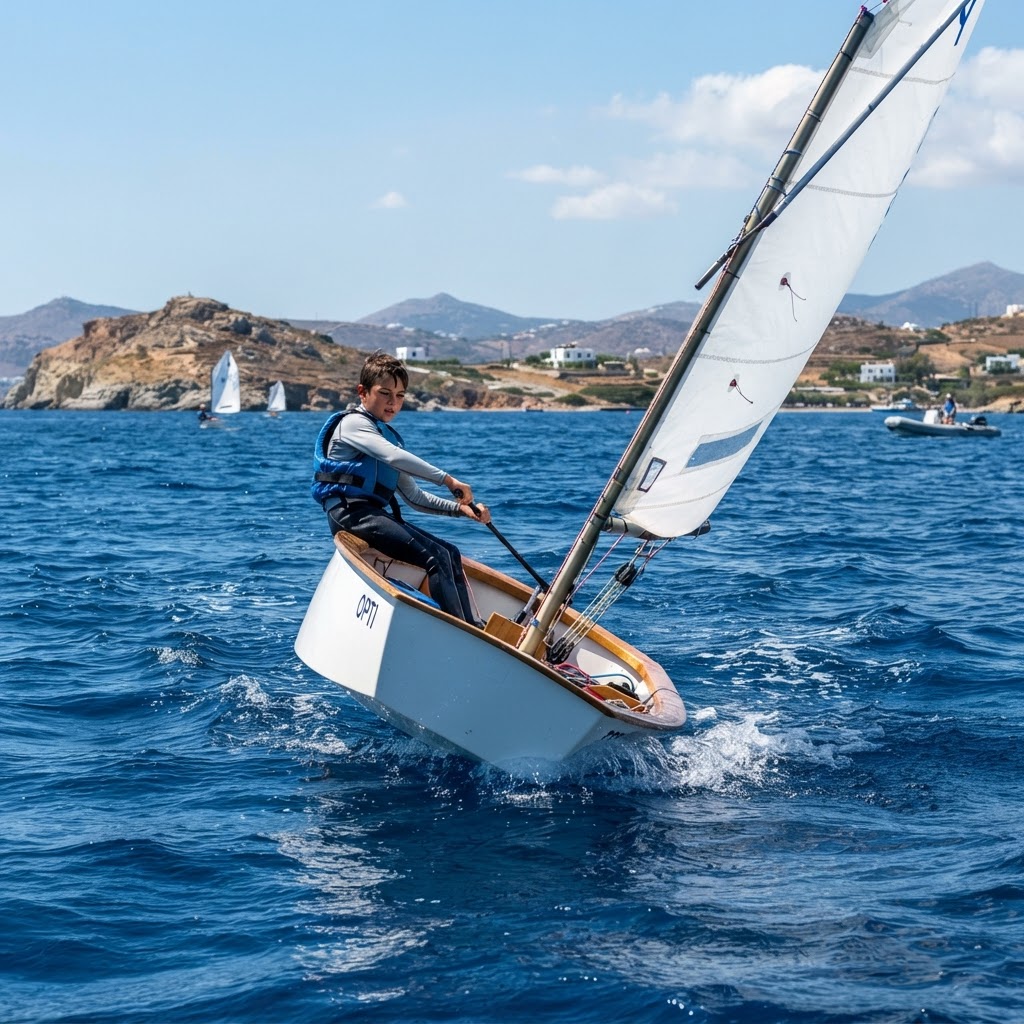
In the world of competitive youth sailing, few maneuvers are as elegant, rewarding, and technically demanding as the roll gybe. For young sailors at the Nautical Club of Artemis and Spata (NOAS), mastering this technique is a rite of passage. Sailing in the beautiful, often challenging waters of the South Euboean Gulf, our athletes learn quickly that the difference between finishing in the middle of the fleet and standing on the podium often comes down to boat handling. The roll gybe is not just a way to change direction; it is a dynamic tool that keeps your speed high, your sail powered up, and your boat stable during a downwind transition.
Understanding the Mechanics: Why Roll Gybe?
A standard gybe in an Optimist can be sluggish if not executed with precision. By simply pushing the tiller, the sail may swing across lazily, and the boat can lose momentum, often dipping its stern or rocking uncontrollably. A roll gybe, however, uses the boat’s own inertia and wind pressure to perform a "pumping" action. When done correctly, the boat heals into the turn, causing the centerboard to lift slightly and the water flow to remain attached to the hull, resulting in a smooth, fast exit. At NOAS, we emphasize that a well-executed roll gybe is a form of kinetic energy generation.
Step-by-Step Execution for Junior Sailors
The process begins long before the sail crosses the centerline. Every movement must be synchronized with the wind and the waves. In the South Euboean Gulf, where chop can often influence your boat's balance, timing is everything.
1. Preparation and Setup
Start by assessing your position. Ensure you have clear space to maneuver. As you prepare to gybe, move your weight slightly forward. This helps the stern release from the water. Keep your eyes on the sail and the wind pressure, ensuring your vang is set correctly—not too tight, but enough to control the boom.
2. The Initiation
As you begin to turn the boat away from the wind, initiate the roll by healing the boat to windward. This is counter-intuitive for beginners, but essential. By pushing the rail down, you effectively reduce the wetted surface of the hull. Your body should be moving across the boat in a controlled, athletic motion.
3. The Boom Swing
As the boat reaches the point of least resistance, release the tension on the mainsheet just enough to allow the boom to swing across with authority. This is where many young sailors hesitate. If the boom is too tight, it will jerk the boat; if it is too loose, you lose power. Pull the sheet through the center as the boom crosses, then immediately trim it as the boat settles on the new tack.
4. The Exit
As the boom snaps over, shift your weight rapidly to the new windward side to level the boat. This sudden shift acts like a flick of a whip, accelerating the boat forward. In the light to moderate winds we often see in Artemis, this momentum is vital to maintain your racing line and keep your speed consistent with the rest of the fleet.
Common Pitfalls and How to Avoid Them
Even experienced racers struggle with the roll gybe when the wind shifts or the waves pick up. A common mistake is "over-rolling." While you want to heel the boat, pushing it too far will lead to a capsize or, at the very least, a stall. Practice is key. At NOAS, we incorporate specific drills during our coaching sessions where we focus solely on body position. Remember, your body weight is the most powerful tool you have in an Optimist.
Another error is poor timing with the sheet. If you wait too long to pull the mainsheet in after the gybe, the sail will flap, and you will lose all the kinetic energy you just created. Practice the "pull and release" rhythm on dry land or in very light wind until it becomes second nature.
The Role of the South Euboean Gulf Conditions
Sailing in the Artemis area provides unique challenges. The local thermals and the specific wave patterns of the South Euboean Gulf teach our sailors to adapt. When the water is choppy, the roll gybe helps keep the boat from "burying the nose" during the turn. Our coaching staff at NOAS is always ready to guide you on how to modify your technique based on the day’s specific wind speed and sea state. We encourage our sailors to observe the water, look for the lulls and puffs, and choose the right moment to initiate the maneuver.
Developing Consistency
Consistency is the hallmark of a great racer. The roll gybe shouldn't be a "lucky" maneuver you pull off once in a while. It should be a refined skill. We encourage our club members to spend extra time during training to isolate this movement. Don't worry about being perfect on the first try; even the most decorated sailors spent hours refining their technique.
Join the NOAS Training Program
If you are interested in refining your skills or if your child is just starting their journey in the world of Optimist sailing, the Nautical Club of Artemis and Spata offers a welcoming environment for all levels. Whether you are aiming for regional regattas or simply want to learn the joy of sailing in a safe and supportive community, our doors are open.
We invite you to visit our club facilities in Artemis to see our training in action, speak with our experienced coaches, or book a trial lesson for your child. Experience the thrill of the sport firsthand and become part of the vibrant sailing community here at NOAS. Contact our secretariat today to learn more about our upcoming programs and how you can join our team.