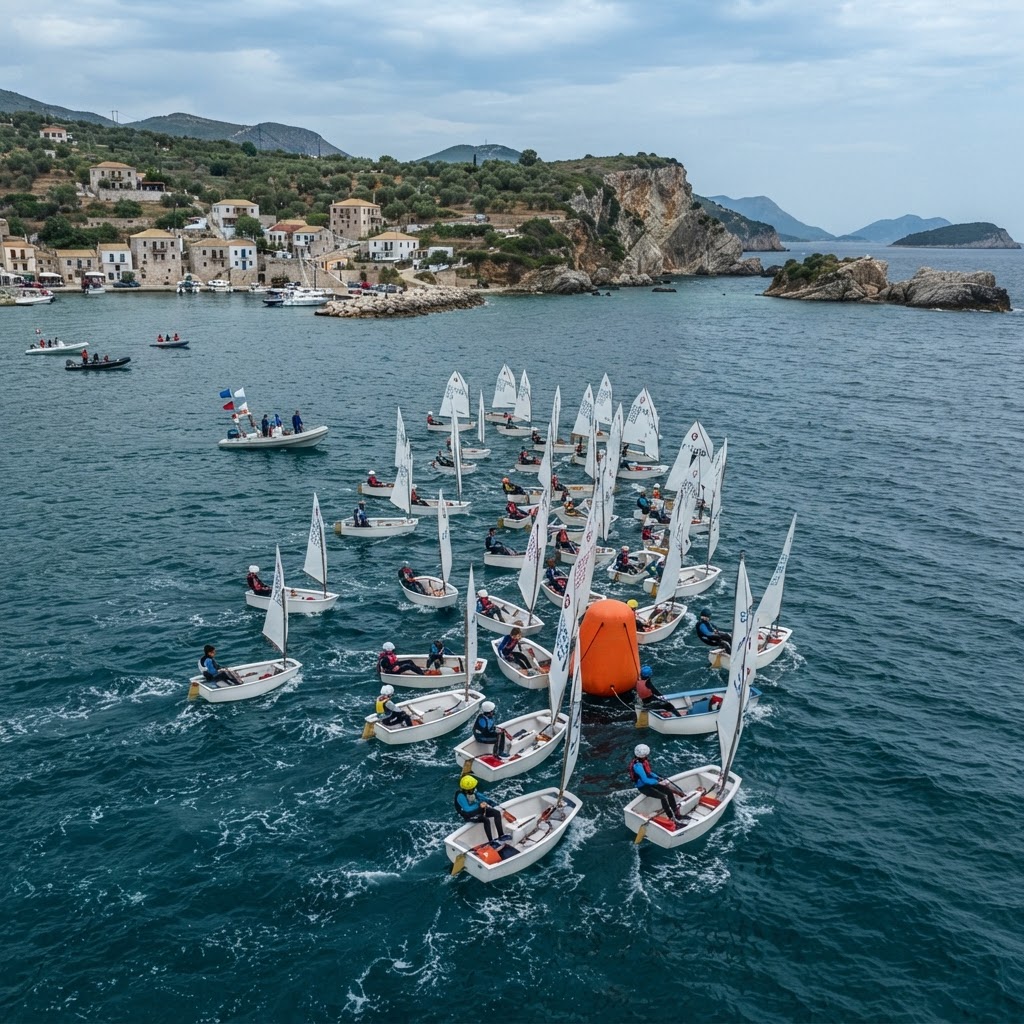
Introduction to the world of Optimist regattas
The moment your child participates in their first sailing regatta is an experience full of adrenaline, anxiety, and pride. For a parent watching from the shore of Artemis, the sea looks full of dozens of small, colorful sails moving in a seemingly random way. However, the truth is quite different: it is a strictly structured race, where strategy, technique, and knowledge of the rules play a decisive role.
At the Nautical Athletic Club of Artemis Spaton (NOAS), we have seen dozens of our athletes take their first steps in the South Euboean Gulf and evolve into capable sailors. The purpose of this guide is to introduce you to the "world of spectators" so that you can understand exactly what is happening out there on the water.
How a race begins: The starting procedure
Everything starts with the signal from the race committee. If you are wondering how a fair start is achieved, it is worth studying the Race start techniques. The race does not start with a gun, but with a series of sound and visual signals (flags) on the committee boat. Children must "tune" their boat, check the Optimist sail trim, and position themselves correctly on the starting line, avoiding being over the line prematurely.
The course and control points
Optimist races are usually held on "triangle" or "windward-leeward" courses. Athletes must pass specific buoys, strictly following the path set by the race course. The ability to read the wind, which requires basic knowledge of Meteorology for sailors, is what separates the winner from the average participant. The ability to perform maneuvers correctly, such as the Roll Tack, provides the necessary speed advantage after every course change.
The role of tactics in the race
Sailing is not just speed; it is "chess on the water." Athletes must make decisions in split seconds, taking into account the current, the wind shift, and the position of their opponents. You can read more about Racing tactics: basic tactical principles to understand how your child "reads" the other sailors on the field.
What you see from the shore
As parents, your role is supportive. From Artemis, you may not discern every detail, but you can see the effort. Do not look only for the podium. Sailing offers life lessons that go beyond winning. As analyzed in the article on What my child will learn in sailing, the discipline and autonomy that children gain through races are the real prizes.
Safety above all
Many parents wonder if the sport is safe, especially when they see children battling the waves. At NOAS, safety is the absolute priority. Support boats are always present, overseeing every moment of the race. You can be fully informed about safety protocols in Is sailing a safe sport? and feel confident that the children are in experienced hands.
How to get in touch with us
If your child is interested in starting or if you want to watch our athletes' progress up close, the Nautical Athletic Club of Artemis Spaton is open to you. Come meet our facility, talk to our coaches, and see the magic of the Optimist up close. Whether it is for a trial lesson or registration at the Academy, our secretariat is at your disposal for any information.
The sea of the South Euboean Gulf is waiting for your next little sailor. Do not hesitate to contact us to start your own nautical adventure.