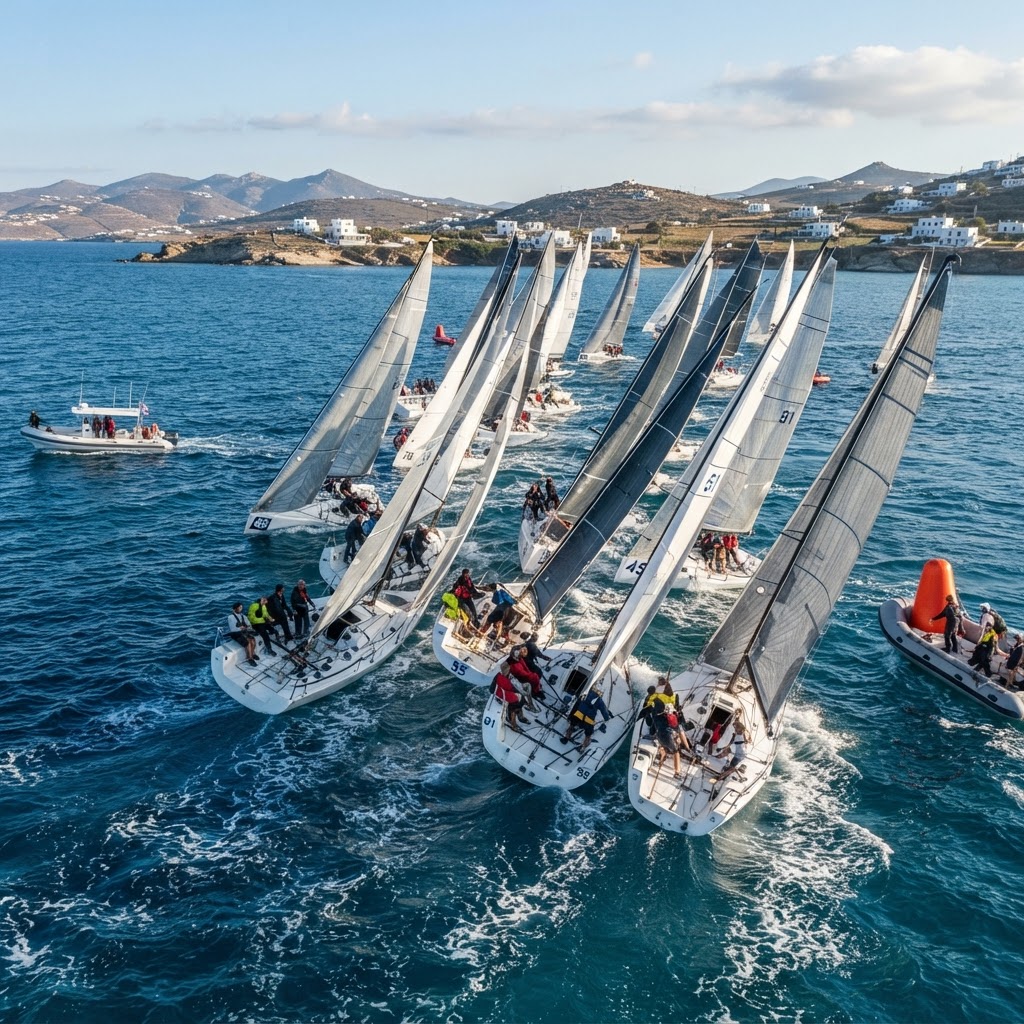
Introduction to starting strategy
The start of a sailing race is considered by many to be the most critical part of the event. At the Nautical Club of Artemis Spata (NOAS), we teach our athletes that a proper start is not just about speed, but about positioning and controlling the boat under pressure. In the waters of the South Euboean Gulf, where conditions can change rapidly, the athlete must combine course reading with technical training.
Pre-start preparation
Before the warning signal, the athlete must have studied the starting line. It is essential to understand which end of the line is favored by the wind. At NOAS, we encourage our sailors to perform at least two passes of the line before the procedure, while simultaneously checking the current and the wind direction.
The importance of 'Time on Distance'
The ability to calculate time and distance is the difference between a good start and a failed one. You must know exactly how much time your boat needs to accelerate and cover the distance to the line. Practicing this technique in Optimist boats helps our young athletes develop a feel for the boat that will accompany them throughout their athletic career.
Positioning and clean air
Every sailor's goal is to start with clean air. If you find yourself trapped behind other boats, your speed will immediately decrease. The strategy we teach is finding a gap on the line where the boat can maintain its speed and move freely toward the first mark.
Techniques for windsurfing and SUP
Although the principles remain similar, starts in windsurfing and SUP require different management of balance. In Artemis, the prevailing winds offer the ideal environment to practice these techniques. Dynamic weight shifting and an immediate reaction to the signal are key.
Continuous training at NOAS
Our academy at NOAS invests in the continuous improvement of its athletes. Through theoretical training and daily practice on the water, we learn to read the wind and adapt in real-time. Races are not won only with the sail, but with the mind and preparation.
Closing
Sailing is an exciting world that combines nature and strategy. We invite you to see our facilities up close and try a lesson with us. Contact the NOAS secretariat to learn more about our academy departments and available training hours.