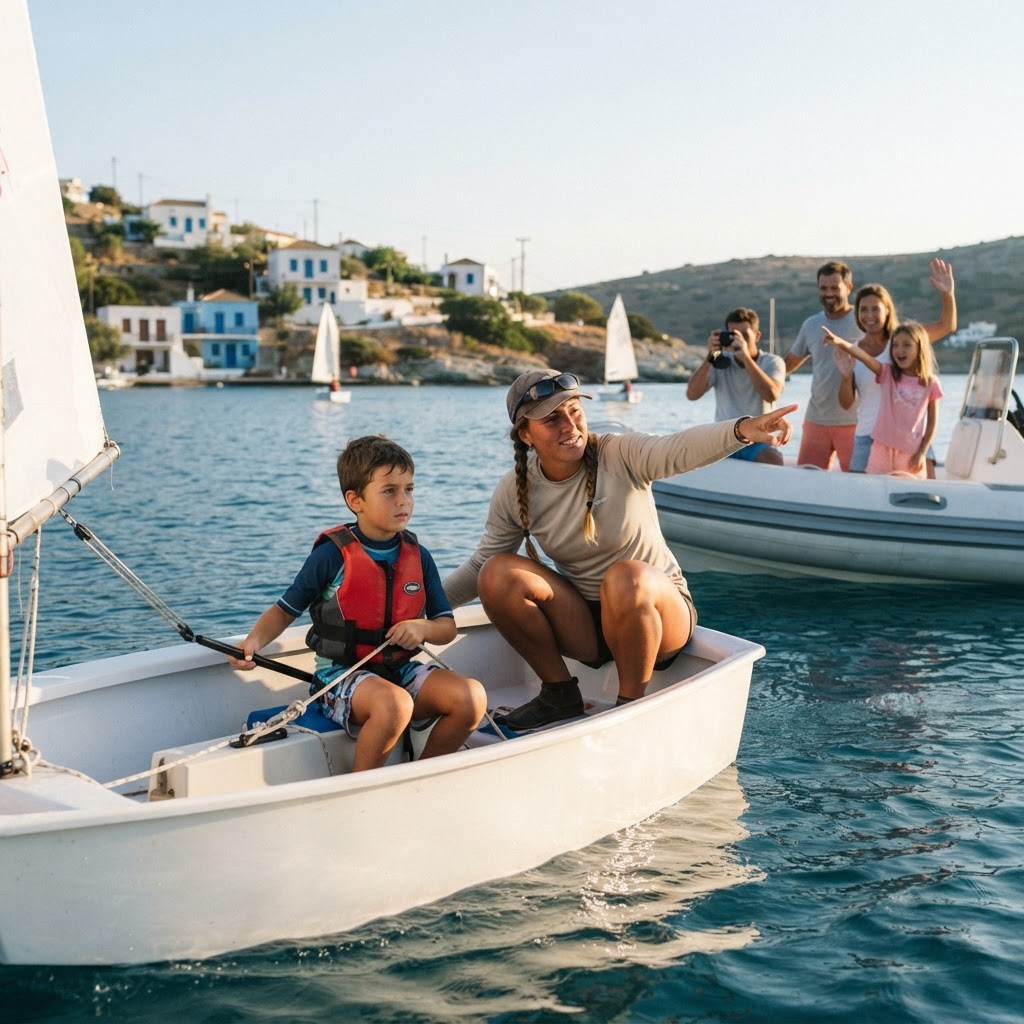
The first sailing lesson is a day that most children remember forever — and one that often causes more anxiety for the parents than the children themselves. Let's look at what it involves in detail so you know exactly what to expect.
Before entering the water: land-based introduction
The first lesson doesn't start in the water — it starts on the beach. The coach will meet the child, show them an Optimist dinghy up close, and explain the basic parts of the boat in simple terms: the sail that catches the wind, the tiller that steers, the daggerboard that keeps the boat on course, and the sheet that controls the sail. They will also learn the safety rules: life jackets are mandatory, stay near the boat in case of a capsize, and always watch for the coach's signals.
Next, the child will help with rigging—the process of preparing the boat: stepping the mast, attaching the sail, and checking the lines. This process is part of the training; in sailing, athletes take care of their own boat from day one.
On the water: the first few meters
For the first few lessons, the coach selects a day with mild weather—a light breeze and calm sea. The child gets into the boat in shallow water with the coach right next to them, either in the water or in a support motorboat. The initial goals are simple: sit correctly in the boat, feel how it reacts to their weight, and maintain a simple course with the wind coming from the side. Most children manage this within the first or second lesson—and the moment the boat moves under the power of the wind, without an engine or oars, just the sail—that is the moment they get hooked.
What will NOT happen in the first lesson
They will not go into deep water alone. They will not face difficult conditions. They will not be pressured to do something they are afraid of. Sailing pedagogy for young ages is built on play and gradual familiarization: first trust in the water and the boat, then technique. Even capsizing—the biggest "fear" for parents—is taught later as a controlled exercise with the coach nearby, so the child learns in practice that it is nothing dangerous.
What to bring
For the first lesson, you only need: a swimsuit, a light shirt or rash guard for sun protection, a hat, sunscreen, water shoes or old sneakers, a towel, dry clothes, and water. A life jacket is provided by the club. Do not buy any specialized gear before the child decides they want to continue.
After the lesson: what to look for
Don't ask "Did you do well?" — ask "How was it?". Most children come out of the water excited. Some might come out feeling cautious—and that is completely normal. Sailing is a whole new environment, and every child approaches it at their own pace. Experienced coaches know this and adapt the program to each individual child.
At NOAS in Artemis, the first trial lesson is the best way to see if the sport is right for your child. Contact the club office to schedule one.