The Importance of Meteorology for the Sailor
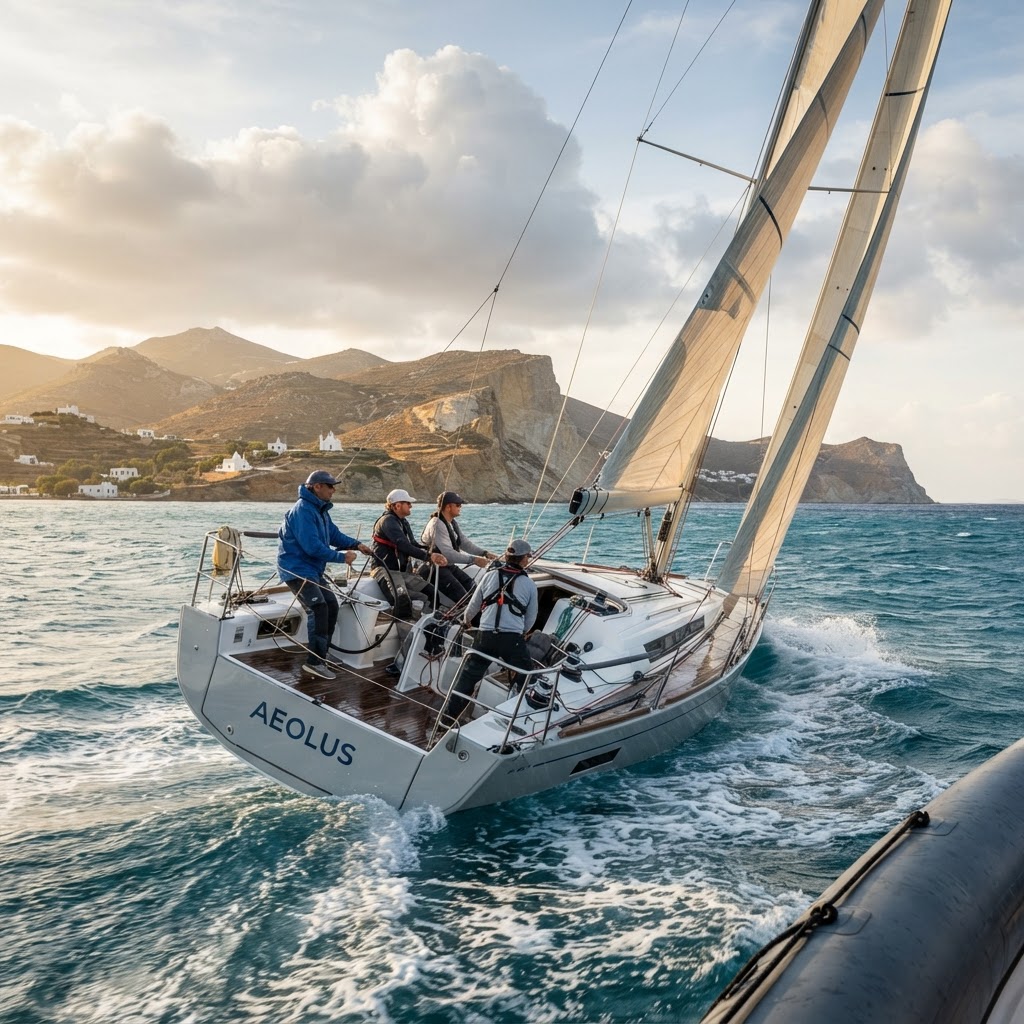
Sailing is the art of working with the elements of nature. For us at the Nautical Athletic Club of Artemida Spata (NOAS), who are fortunate to operate in the unique waters of the South Euboean Gulf, knowledge of meteorology is not just academic; it is a fundamental tool for the safety and success of our athletes. Whether it concerns young Optimist athletes or enthusiasts of windsurfing and SUP, the ability to read the weather determines the difference between a pleasant ride and a difficult situation.
The Effect of the South Euboean Gulf on Weather Phenomena
The South Euboean Gulf presents peculiarities that every sailor in Artemida must know. Local winds are directly influenced by the coastline's configuration and the orography of Euboea and Attica. Often, we observe phenomena where wind intensity increases locally due to the funneling of air between the mountains, a fact that requires increased readiness and constant observation of the horizon.
Fundamental Principles: How Wind is Created
At the core of sailing lies pressure difference. Wind moves from areas of high pressure to areas of low pressure. The greater this difference, the stronger the wind. During the day, the land heats up faster than the sea. This creates updrafts over the land, resulting in the cooler sea air moving inland, creating what we all know as the "sea breeze." At NOAS, we teach our students to identify these microclimates, as they directly affect their tactics on the water.
How We Recognize Weather Changes
Observation is a sailor's most important skill. Clouds are the best indicators. For example, cumulus clouds that develop vertically may indicate instability, while the appearance of high, thin clouds (cirrus) often heralds a change in weather conditions within the next 24 hours. Furthermore, changes in temperature and humidity are immediately noticeable before a shift.
The Importance of Weather Forecasts and Technology
Although empirical observation is critical, the use of modern tools is essential. Official forecasts give us a general picture, but at NOAS we encourage our athletes to learn to combine map data (isobars, wind maps) with the reality they see before them on the beach of Artemida. The ability to distinguish whether a forecast holds true or if local conditions differ is what sets an average sailor apart.
Safety and Prevention: The NOAS Mentality
At NOAS, our priority is safety. Meteorology is not just about winning races, but about knowing when it is safe to go out on the water and when to stay on land. Decision-making is based on predicting wind intensity, direction, and, most importantly, the probability of sudden shifts.
How to Deepen Your Knowledge
Theory is the beginning, but practice on the water is the best teacher. Whether you are a beginner in Optimist or experienced in windsurfing, sharing your observations with our instructors at NOAS is the best way to evolve. We invite you to visit our facilities in Artemida, meet our team, and discuss the peculiarities of the South Euboean Gulf in person. Contact our secretariat today to schedule a visit or to learn about the next trial lesson in our academy.