The Importance of the Beaufort Scale in Sailing
For every sailor, from the young Optimist athletes at NOAS to the experienced windsurfers of the South Euboean Gulf, knowing the wind intensity is the alpha and omega of safety and success. The Beaufort scale is not just a number, but the common language we all speak at sea to understand wind behavior and how it affects our sailing.
What is the Beaufort Scale?
The Beaufort scale is an empirical system for measuring wind intensity based on observed conditions at sea. It was established by Admiral Sir Francis Beaufort in the early 19th century. Instead of relying on complex instrumental data, this scale describes what we see: from the calm, glassy surface to the white-capped waves.
Detailed Description of Levels
0-3 Beaufort: From Calm to Light Breeze
At 0 Beaufort, the sea is like a mirror, an ideal condition for observing subtle changes in the current. With 1-3 Beaufort, the feeling in Artemida is ideal for beginners. The boat moves leisurely, allowing the trainee to practice trimming and basic steering without stress.
4-6 Beaufort: The Heart of the Sport
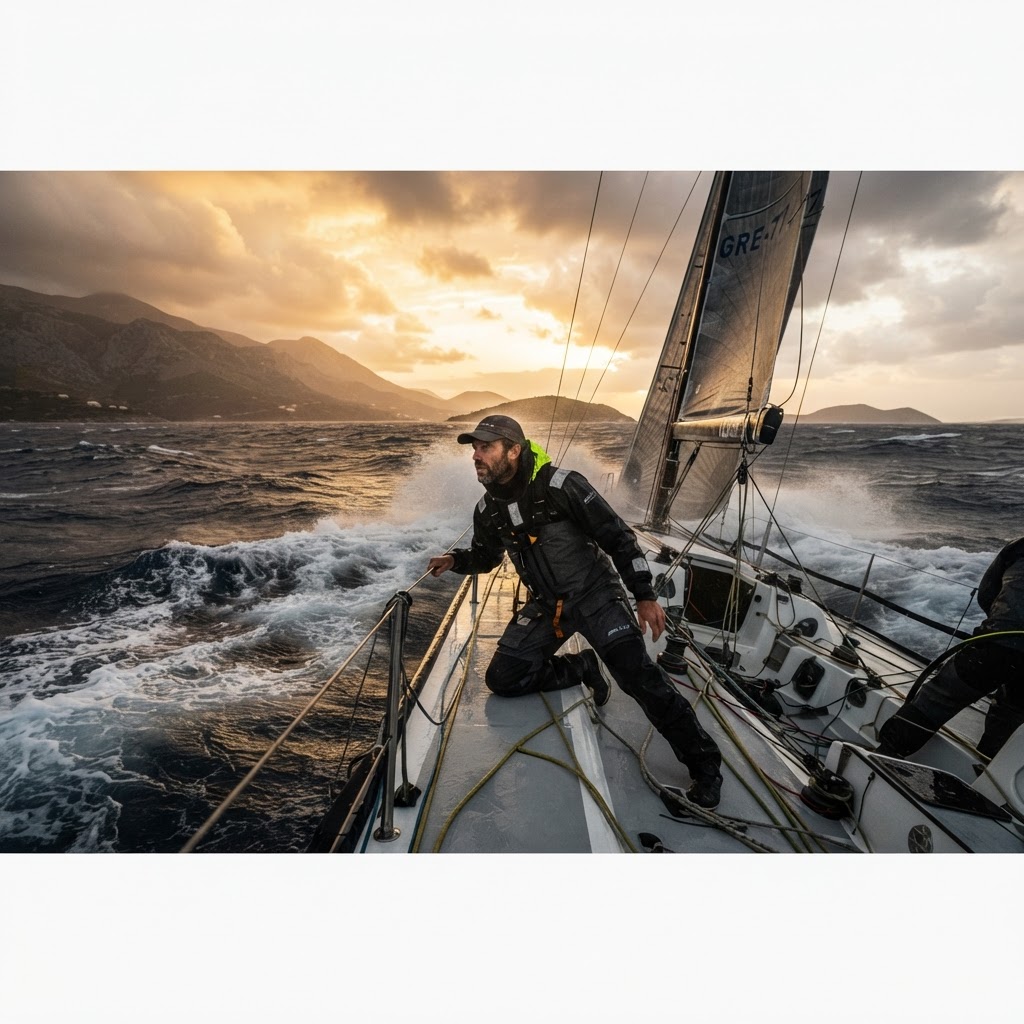
This is where the real game begins. At 4 Beaufort, the boat gains speed. At 5-6 Beaufort, the experienced sailor feels the adrenaline rising. In the South Euboean Gulf, these conditions are frequent and require increased concentration, proper equipment, and full control of the boat.
7-12 Beaufort: Caution and Safety
From 7 Beaufort and above, the situation becomes significantly more difficult. Conditions are characterized as stormy, and training at the club is adjusted accordingly. The safety of our athletes is the top priority, and at such intensities, we avoid going out to sea, focusing instead on theoretical training at our facilities.
How Wind Knowledge Improves the Athlete
The ability to estimate wind intensity before even pushing the boat into the water is a skill that comes with experience and constant practice. An athlete who understands the Beaufort scale can predict how their boat will respond, choosing the appropriate sailing angles and properly adjusting their sails. At NOAS, we encourage our students to observe the environment, read the gusts, and connect the visual image of the sea with the corresponding Beaufort number.
Preparation for Lessons at NOAS
Whether you are involved in windsurfing or Optimist dinghies, understanding the weather is part of our education. Artemida offers a unique field for learning about weather phenomena. Our coaches are always at your disposal to analyze the day's conditions before heading out to sea. Do not hesitate to contact the club's secretariat to learn how you can participate in the next trial lessons. Sailing is not just a sport; it is a way of life and a connection with nature that begins with the first 'wind panel' you learn to read.