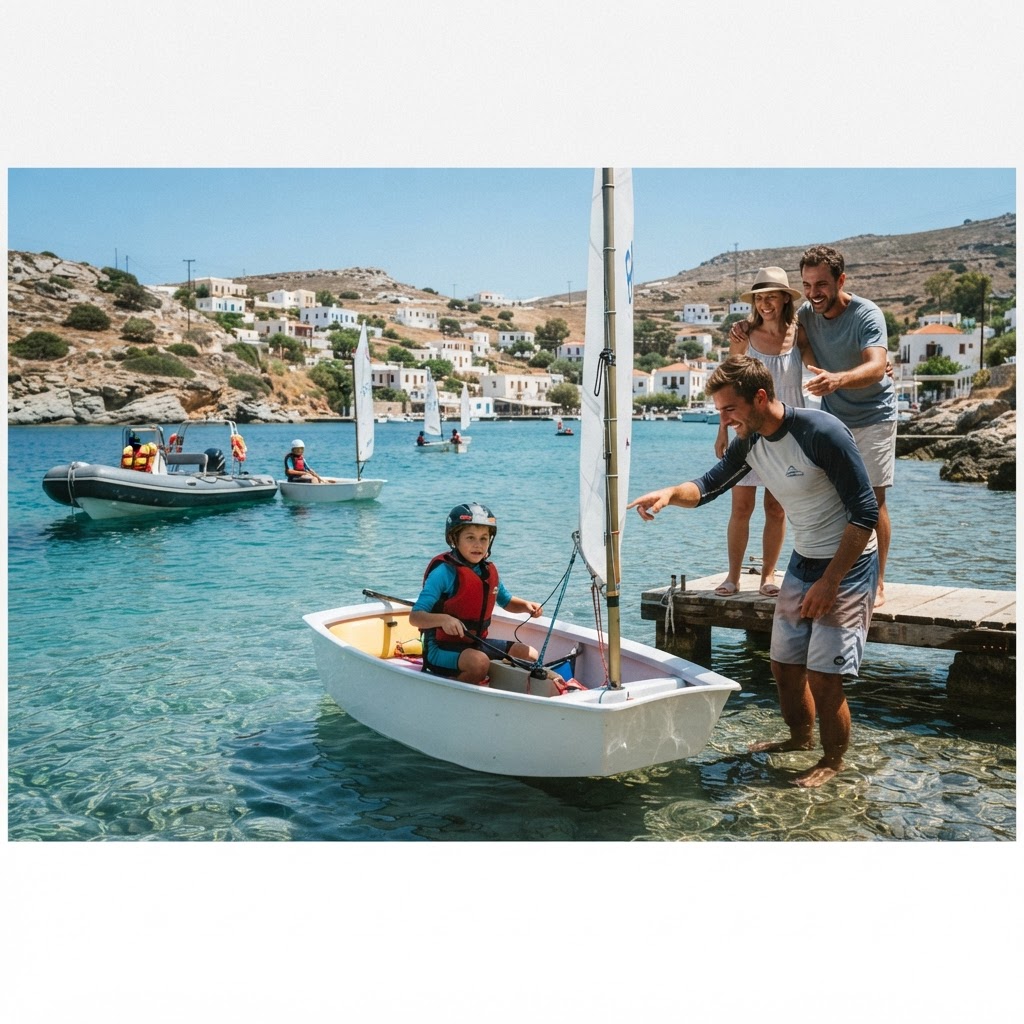
When parents look for a sport for their child, sailing is rarely the first thought—and yet, those who know it from the inside know it is one of the most comprehensive "schools" a child can attend. See the reasons—not as promotional slogans, but as specific things that happen in every training session.
1. They learn to make decisions on their own
In an Optimist boat, there is no adult next to the child. The coach oversees from the safety boat, but the decisions—when to turn, how to trim the sail, where to sit—are made by the child every few seconds. Few experiences in childhood offer such a clear sense of responsibility and capability: "I did it myself."
2. It cultivates composure and crisis management
The wind changes, the waves grow, the boat heels over. The child learns that panic does not help—a calm reaction does. Even capsizing, which at first seems frightening, becomes a simple, controlled process that the child handles with confidence. This relationship with the unexpected carries over into their entire life.
3. It connects the child to nature—for real
Sailing does not happen on a court or indoors: it takes place at sea, with the sun, the wind, and the seasons. The child learns to observe the sky, to "read" the water, and to respect the elements of nature. In an age of screens, this daily, essential contact with the natural environment is, in itself, a huge gift.
4. It trains body and mind simultaneously
Sailing works on balance, core strength, coordination, and endurance—but at the same time, it is a constant game of strategy. Races are like chess on the water: they require observation, anticipation, and quick thinking. That is why it suits "athletic" and "thoughtful" children equally—and often helps children who did not stand out in team sports to shine.
5. It offers community and lifelong friendships
Although the athlete competes alone, life at the club is collective: children rig their boats together, wait for the wind together, and travel together to regattas across Greece. The friendships born on the docks and during trips often last a lifetime.
6. It is a sport for life
Soccer and gymnastics have an "expiration date"; sailing does not. A child who learns to sail at 8 will be able to enjoy the sea—competitively or otherwise—for the rest of their life. It is a skill that is never lost.
7. It is safer than you think
In an organized club, training always takes place with a life jacket, a safety boat, and a weather assessment before every session. The Optimist is designed to float even when filled with water, and managing a capsize is taught from the very first lessons as something normal.
The next step
The best way to understand if sailing is right for your child is to bring them to the club one day: to watch a training session, talk to the coaches, and take a trial lesson. At NOAS, in Artemis, our door is open for exactly this kind of introduction.