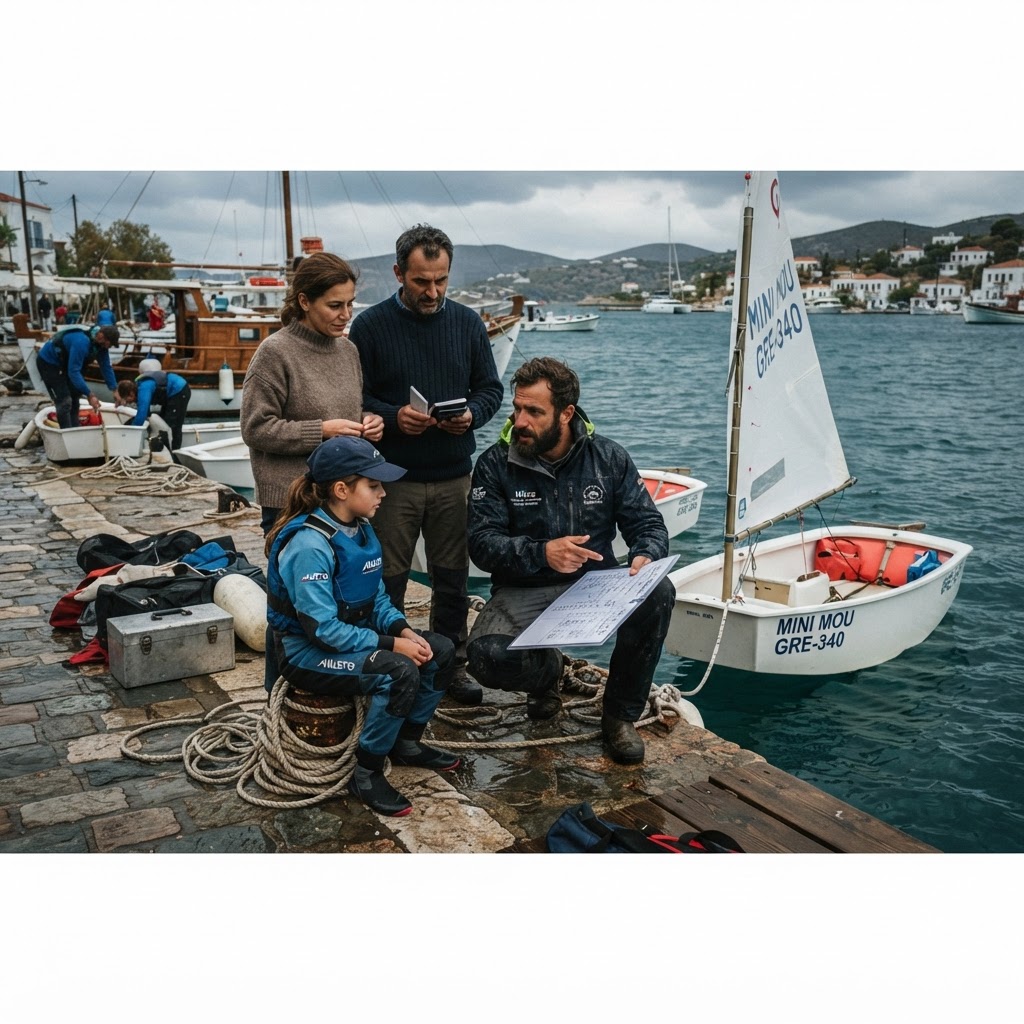
Sailing carries a reputation as an "expensive sport" — images of yachts and marinas do not help. The reality of children's sailing at a nautical club is very different: at the learning level, the cost is comparable to any other organized athletic activity. Let's look in detail at what a family pays at each stage.
Stage 1: Learning (the 1st-2nd year)
At the beginning, expenses are limited to three categories:
Club registration and subscription. Each club sets its own pricing policy — usually a one-time registration fee and a monthly or annual subscription that covers training, use of club boats, and coaching supervision. In most Greek clubs, the monthly cost is similar to that of a language school or a team sport. For current NOAS subscriptions, please contact the club's secretariat.
Personal equipment. The boat, sails, and life jacket are provided by the club. The family covers only personal items: a swimsuit or lycra, water shoes, a hat, sunscreen, and, if the child continues into the winter, a child's wetsuit. In total, the first year's equipment costs less than a good football "kit" with shoes.
Bureaucracy. The athlete's health card requires a medical examination — often free through public facilities or at a small cost privately.
Stage 2: Pre-competitive level
When the child starts participating in competitions, the following are added: the HSF (Hellenic Sailing Federation) athlete license, entry fees for competitions (a small fee per event), and travel expenses for out-of-town competitions. In inter-club competitions in Attica, this cost is negligible; it increases only in national competitions involving overnight stays.
Stage 3: Competitive level
Here — and only here — do expenses grow significantly: personal boat (buying used is the rule and holds its value for resale), racing sail, more travel, and possibly participation in international events. However, it is important to emphasize: only those who consciously choose this stage reach it, after years — and the decision is made gradually, together with the coach.
The comparison that matters
If you compare the total annual cost of the first stage with any other extracurricular activity — swimming, tennis, music — sailing does not stand out as more expensive. What does stand out is what the child gains: a life skill, autonomy, and a relationship with the sea that never ends.
For specific amounts and NOAS programs, contact the secretariat or visit the club on a Sunday morning — the best time to see the children in action.