Understanding the Thermal Winds: The Sea Breeze in Artemida
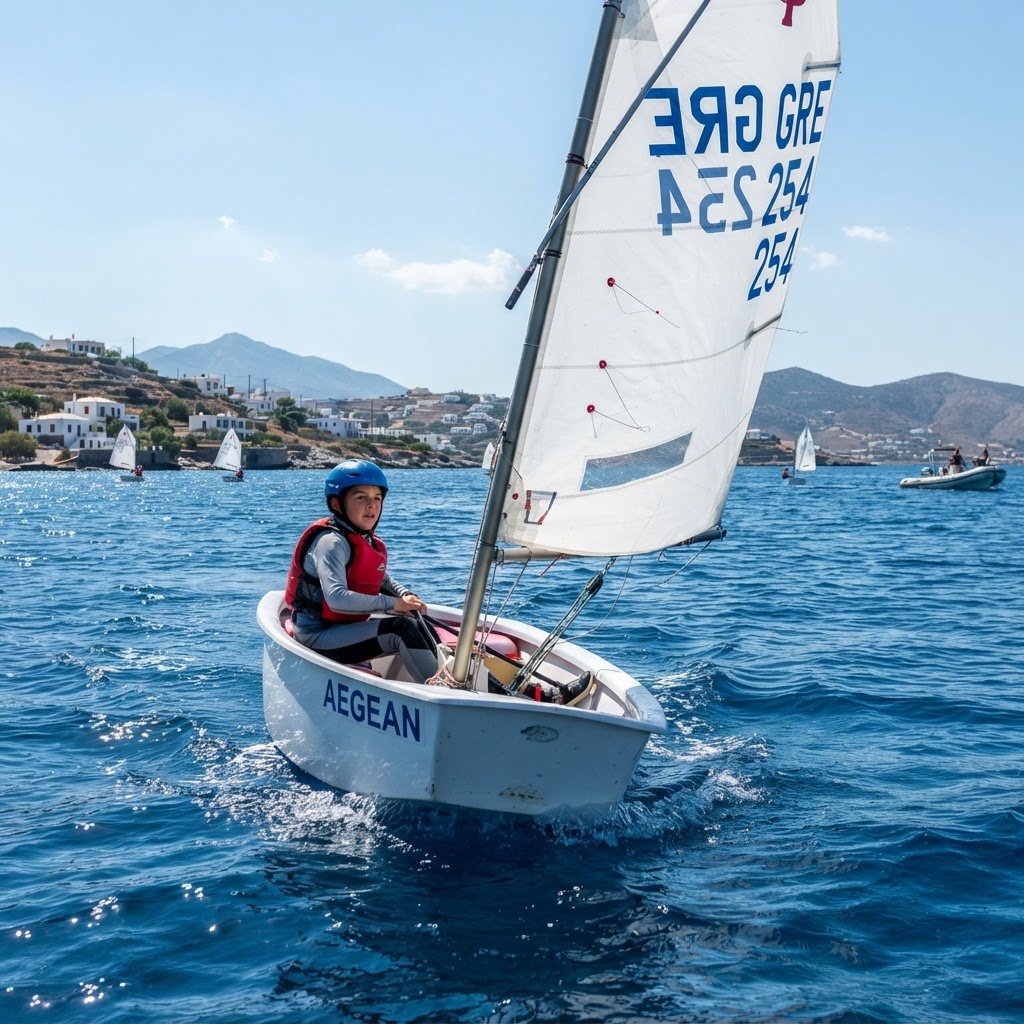
For those of us at the Nautical Sports Club of Artemida and Spata (NOAS), the sea is not just a place for leisure; it is a complex, living system that challenges and inspires our young sailors daily. One of the most fascinating aspects of sailing in our home waters of the South Euboean Gulf is the phenomenon of thermal winds, commonly known as the 'sea breeze' or 'meltemi-like' thermal effects. Understanding these winds is a rite of passage for every child starting their journey in an Optimist dinghy.
The Science Behind the Breeze: Why it Happens
At its core, the sea breeze is a masterpiece of atmospheric thermodynamics. During the day, the land surface of the Attica coastline absorbs solar radiation much faster than the surface of the South Euboean Gulf. As the land heats up, the air directly above it warms, expands, and becomes less dense, causing it to rise. This creates a localized area of low pressure over the land.
Meanwhile, the cooler air over the sea, being denser and under higher pressure, rushes in to fill the void left by the rising warm air. This movement of air from the cool sea to the warming land is what we experience as the afternoon sea breeze. In Artemida, our geographical orientation allows for a consistent and reliable thermal flow that makes our waters ideal for training beginners in the Optimist class.
Why Thermal Winds Matter for Optimist Sailors
For a child learning to sail an Optimist, the wind is their primary engine and their most complex puzzle. Thermal winds are generally predictable in their daily cycle, typically building up strength throughout the afternoon. This predictability is vital for our coaches at NOAS. It allows us to plan training sessions where conditions are manageable for young sailors, gradually increasing their exposure to stronger breezes as their skills develop.
Understanding these winds helps children learn how to 'read' the water. They notice the ripples, the change in temperature on their skin, and how their boat reacts when the breeze kicks in. These are the building blocks of becoming a confident sailor who respects the elements while mastering them.
Artemida and the South Euboean Gulf: A Unique Microclimate
The coastline of Artemida offers a unique vantage point. The interaction between the local topography and the maritime influence of the South Euboean Gulf results in a steady thermal wind that is the envy of many clubs. Unlike unpredictable storm fronts, the sea breeze here is a rhythmic daily event that invites progression.
Our young athletes in the Optimist, ILCA, and windsurfing departments learn to anticipate the shift, understanding how the sea breeze interacts with the coastline. By observing the clouds forming over the inland hills, they learn to predict the strength of the incoming wind. This connection to nature is one of the profound, non-sporting benefits our sailors gain—a deep, intuitive understanding of the environment.
Mastering the Conditions: From Theory to Practice
Theoretical knowledge is only as good as its application on the water. At NOAS, we emphasize that sailing is a sport of constant adjustment. As the sea breeze builds, sailors must adjust their sail trim, manage their body weight, and refine their steering. Learning to handle the gusty onset of a thermal wind teaches patience, focus, and rapid decision-making.
For the young sailor, the sea breeze is an opportunity to practice the fundamental techniques of balance and control. Whether they are balancing an Optimist in light airs or learning to hike out as the wind picks up, the thermal wind provides the perfect, consistent training partner.
Join the NOAS Family
Are you looking for an activity that combines physical skill, mental acuity, and a deep connection to the nature of the Attica coast? The Nautical Sports Club of Artemida and Spata welcomes children of all backgrounds to explore the world of sailing. Whether your child dreams of competing in the Optimist class or simply wants to enjoy the unique pleasure of windsurfing in the Euboean breeze, our doors are open.
We invite you to visit our club facilities in Artemida. Meet our experienced coaching staff, see our fleet, and learn more about our training programs. Our secretariat is at your disposal to provide all necessary details regarding memberships, introductory trial lessons, and the safety measures we implement to ensure every session is a positive experience for your child. Discover the joy of sailing where the sea meets the sky, and help your child build memories that will last a lifetime.