Mastering Downwind Sailing: Boosting Speed and Efficiency
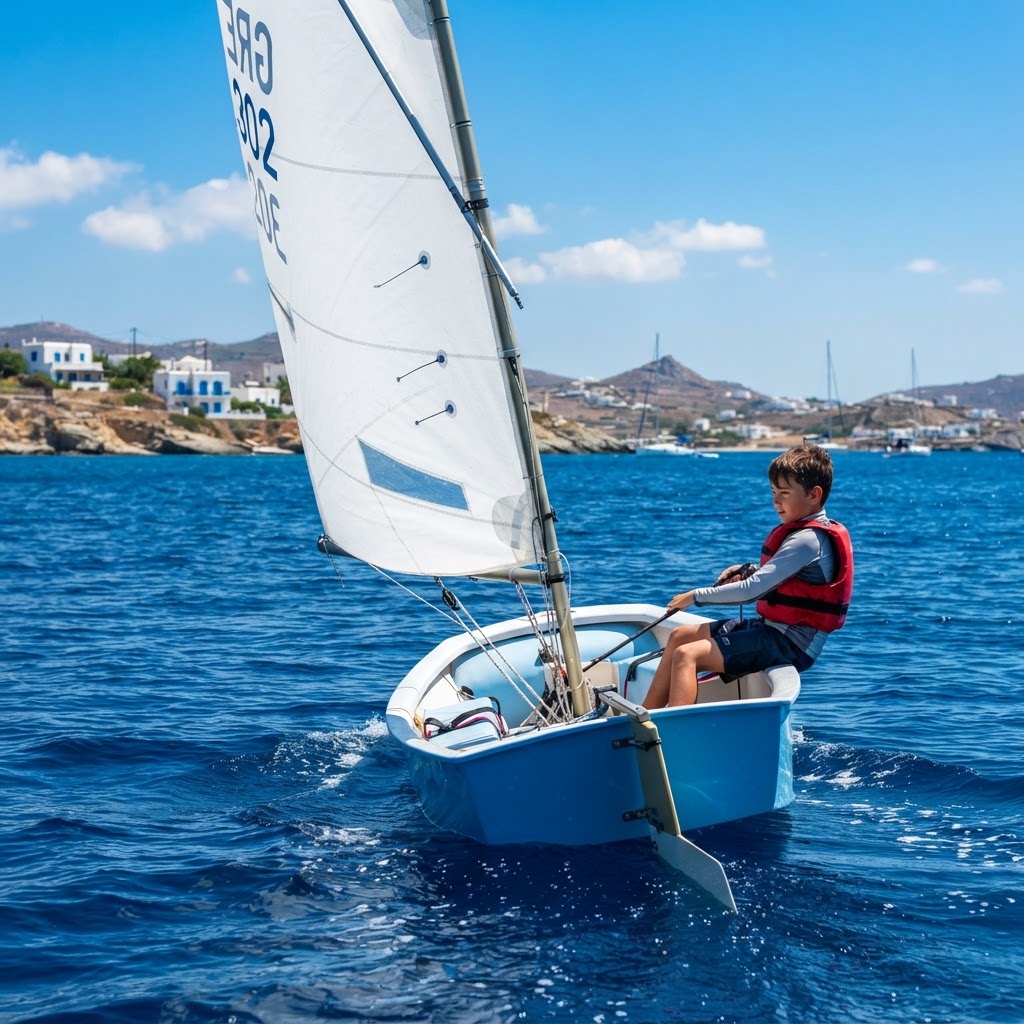
Downwind sailing is often perceived as the most relaxing part of an Optimist or ILCA race, but for the competitive sailor, it is a critical phase where races are won or lost. Mastering the art of sailing downwind involves a blend of physics, tactile sensitivity, and strategic decision-making. At the Nautical Athletic Club of Artemis Spata (NOAS), our coaches place great emphasis on these skills, helping young sailors navigate the challenging waters of the South Euboean Gulf with confidence and speed.
The Physics of Downwind Sailing
Unlike sailing upwind, where the boat relies on lift generated by the sail acting as an airfoil, downwind sailing is primarily driven by drag—or a combination of lift and drag, depending on the point of sail. In an Optimist, because the sail is essentially a single flat-cut sheet with a sprit, managing airflow is about keeping the sail "open" to catch the maximum amount of wind.
When sailing downwind, your primary goal is to maintain the "apparent wind" as high as possible. As you bear away, the apparent wind speed decreases. If you steer too deep, the sail loses its pressure, and the boat slows down. Finding the optimal angle—the "VMC" (Velocity Made Good on Course)—is what separates the podium finishers from the rest of the fleet.
Boat Trim and Body Position in an Optimist
In the Optimist class, weight distribution is everything. When sailing downwind, you generally want the boat to be level or slightly heeled to windward. This reduces the wetted surface area of the hull, allowing the boat to glide more freely through the water.
- Heel Control: In light winds, heel the boat slightly to windward to keep the boom away from the sail and let the sail shape itself due to gravity. In stronger winds, keep the boat flat to maintain stability and prevent the bow from digging into the water.
- Centerboard Position: One of the most common mistakes beginners make is keeping the centerboard all the way down. When sailing downwind, lift the board partway (usually halfway or more) to reduce drag. Be careful, though—in very wavy conditions in the South Euboean Gulf, keeping the board down can provide extra stability.
- Sail Trim: Adjust your sprit and outhaul according to the wind strength. In light air, ensure the sail is full and powerful. As the wind picks up, flatten the sail to maintain control.
Reading the Waves: The South Euboean Advantage
Sailing off the coast of Artemis provides a unique training ground. The South Euboean Gulf often features choppy, short-period waves. To sail fast downwind here, you must learn to "surf." Look for the pressure and the wave pattern. As a wave approaches from behind, steer the boat to catch it. Once you feel the boat accelerating on the face of the wave, bear away slightly to stay on the wave longer. This technique, often called "pumping the waves," is essential for increasing your average speed over the course.
Tactical Considerations: Positioning and Strategy
Downwind legs are tactical battles. You are not just sailing; you are monitoring the wind shifts and the positions of your competitors.
- Protecting Your Air: Always try to stay in clear wind. If a boat is behind and to your windward side, they will likely try to blanket you. Shift your position to force them to tack or sail around your disturbed air.
- The Leeward Gate: Approach the leeward mark with a plan. Decide early which side of the gate you want to take based on the upcoming upwind leg's wind favored side. Preparing your exit strategy while still on the downwind leg is a hallmark of a mature racer.
Training at NOAS
At our club, we utilize the diverse conditions of the Artemis coastline to teach our athletes how to adapt. Whether you are in the Optimist or transitioning to the ILCA, the fundamental principles of downwind sailing remain the same: sensitivity to the helm, awareness of the wind, and disciplined body movement. Our training sessions, which include both on-water drills and post-race analysis, ensure that every sailor understands not just how to move the boat, but why the boat moves the way it does.
If you are interested in honing your racing skills or are looking for a community that values technical growth and sportsmanship, we invite you to reach out. Our coaches are dedicated to the progress of every member, from the youngest beginner in our Academy to our seasoned racing team. Come visit us at our facilities in Artemis, observe a training session, or inquire about our trial lessons at the secretariat. Let us help you find your speed on the water.