Introduction to the ILCA and the importance of hiking
The ILCA, known to many by its older name, the Laser, is the flagship of single-handed sailing dinghies. As an Olympic class, it requires the athlete to possess not only strategic thinking and the ability to read the racecourse but also top-tier physical fitness. At the Artemida Nautical Athletic Club (NOAS), we have seen dozens of athletes, from the ILCA 4 to the ILCA 7 level, wonder what separates the average sailor from the champion. The answer is simple yet demanding: the technique of hiking.
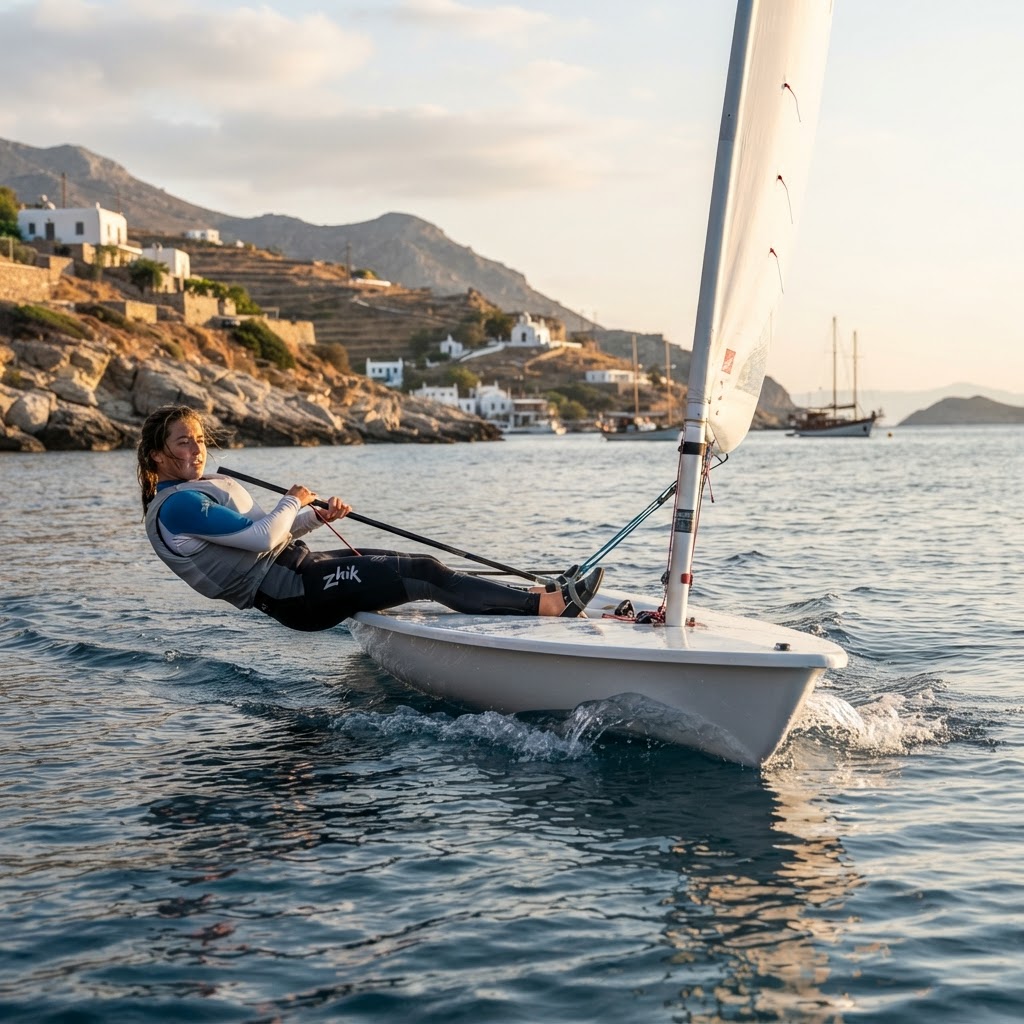
Hiking, or the body position used to balance the boat, is the art of moving your center of gravity outside the gunwale, using only the strength of your legs and abdominals. In the waters of the South Euboean Gulf, where conditions can shift from calm to strong northerly winds within minutes, proper hiking is not just a technical skill; it is a tool for survival and speed.
Body mechanics in hiking
To achieve maximum performance, your body must function as a counterbalance. The principle is simple: the further your center of gravity is from the boat, the more force you exert to keep the boat flat. A boat that is upright in the water has the smallest possible wetted surface, which means less friction and greater speed.
Proper posture starts with locking the knees. The legs must be straight, while the torso should be kept in a straight line. Many athletes at NOAS make the mistake of bending at the waist, which overly tires the back muscles and reduces the effectiveness of the lever they are creating. Power should come from the legs and be supported by the abdominals to create a solid, unyielding bridge.
The importance of hiking straps
Without the right straps, hiking is impossible. In the ILCA, the straps are the sailor's connection to the boat. They must be adjusted to allow for comfortable movement while providing the necessary security when the boat heels. At our facilities in Artemida, we place great emphasis on the proper adjustment of equipment, as a loose strap can lead to a loss of control in strong wind conditions.
Training for pain tolerance
Hiking is an endurance exercise. To maintain proper hiking form during a 45-minute race in the South Euboean Gulf, you need specialized physical training. At the NOAS Academy, our coaches encourage athletes of all categories (ILCA 4, 6, and 7) to follow strength programs that focus on the quadriceps and the core.
It is not enough to know the theory. You must "build" your muscles. Land-based training with exercises like planks and squats is essential. However, the best training remains time on the water. Every time you go out for a practice session with NOAS, try to extend the time you hold your hike, even if it is not strictly necessary due to wind intensity. Body adaptation comes through repetition.
Differences in hiking depending on the rig (ILCA 4, 6, 7)
Although the basic technique remains the same, the rig each athlete uses changes how they experience hiking:
- ILCA 4: Ideal for young athletes. Here, we learn the basics of balance without the excessive pressure of the wind.
- ILCA 6: The transition class. It requires more strength and a better understanding of boat movement.
- ILCA 7: The men's Olympic class. Here, hiking becomes a game of endurance in marginal conditions. The strength required to keep the boat flat is immense.
How to improve your hiking at NOAS
The Artemida Nautical Athletic Club offers the ideal environment to perfect your technique. Our waters are ideal for practicing at different points of sail. If you feel that your hiking is limiting your performance, do not hesitate to ask for an analysis from our coaches. Through video analysis and on-the-water guidance, we can identify the weaknesses in your posture.
Closing and invitation
Hiking is the language with which your boat speaks to the wind. The more clearly you speak this language, the faster you will travel. Whether you are a teenager just starting in the ILCA 4 or an adult looking to test your limits in the ILCA 7, NOAS is waiting for you.
The sea of Artemida is ready to challenge you. Don't let your physical condition become an obstacle to your progress. Contact our club's secretariat today to learn about our Academy's programs, book a trial lesson, or discuss with our experienced coaches how you can upgrade your technique. Success on the water starts with passion and the will for continuous improvement. We look forward to seeing you at NOAS!