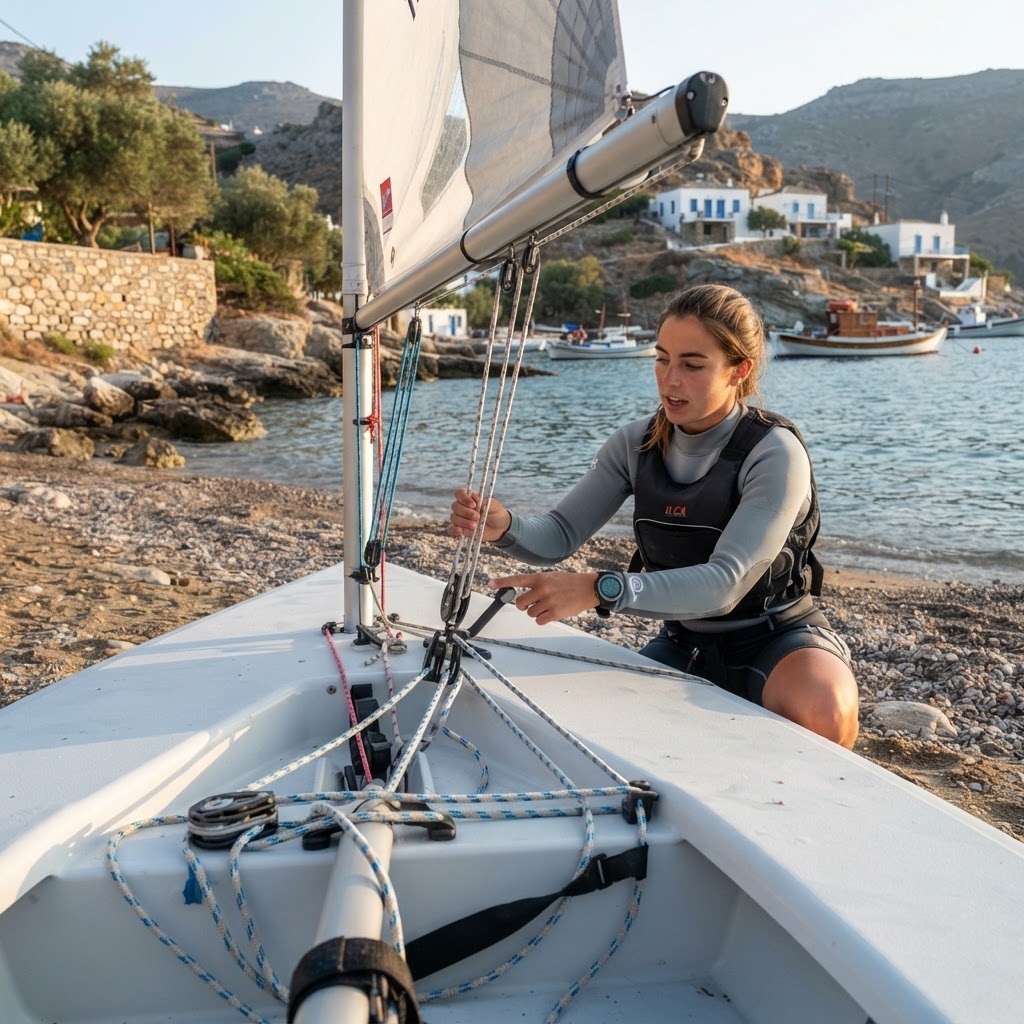
Entering the world of ILCA: A fresh start at NOAS
The transition to the ILCA (formerly Laser) is one of the most exciting milestones in a sailor's journey. At the Nautical Athletic Club of Artemis-Spata (NOAS), we see new athletes and adults every day discovering the potential of this Olympic class in the waters of the South Euboean Gulf. When someone starts as an ILCA beginner, the first and most common question concerns equipment. What do you really need to get out on the water safely and efficiently? In this guide, we will demystify equipment needs, focusing on the absolute essentials for the first phase of training.
Personal athlete equipment: Safety first
Before we talk about the boat, the sailor's own equipment is the top priority. At NOAS, safety is the foundation of training. Every athlete, regardless of the ILCA class (4, 6, or 7), must have a sailing-certified life jacket that fits their body properly. A life jacket is not a burden; it is your best friend at sea.
Furthermore, a sailing wetsuit is essential. Depending on the season in the South Euboean Gulf, choose the appropriate neoprene thickness. For the summer months, a shorty wetsuit is enough to protect against the sun and scratches, while a full-length suit is required for winter. Don't forget sailing shoes with a non-slip sole. Traction on the ILCA deck is critical, as the boat's heel requires stability and good contact with the hull during hiking.
What the boat needs: The basic rig equipment
The ILCA is a boat based on minimalism and functionality. A beginner does not need to invest in high-cost racing systems from day one. What is needed is a well-maintained boat with properly functioning sail control systems (vang, cunningham, outhaul). The ease of handling these lines from the cockpit is what makes the ILCA stand out.
At NOAS, our coaches will guide you on which rig suits your weight and experience level. The ILCA 4 is ideal for introduction, while the ILCA 6 and ILCA 7 offer a gradual increase in power. Maintaining the boat's equipment involves regular checks of blocks and lines so that they do not show wear that would hinder learning.
Protection from the sun and salt
Artemis offers ideal conditions for training, but the Attic sun requires caution. A hat, durable sunglasses with a strap, and high-SPF sunscreen are integral parts of every sailor's equipment. Exposure to the marine environment demands respect, and your gear must protect you so you remain focused on the lesson rather than discomfort.
The importance of simplicity for the beginner
The biggest mistake many beginners make is trying to over-equip. In the ILCA, technique comes from repetition and knowledge of the boat. Don't worry about the most advanced trim systems or the most expensive racing sails. Focus on learning the boat with basic systems, which allow the sailor to understand the physics of sailing. Once your level increases, the club will suggest the next steps for upgrading your equipment.
The role of NOAS in your training
At NOAS, our philosophy is openness and proper guidance. You are not alone in this process. Our experienced coaches will help you choose the right sizes, check the condition of a used boat if you are considering a purchase, and understand the specifics of the ILCA in Artemis. Whether it is boat equipment or your personal gear, our administration and coaching staff are at your disposal for any questions.
Sailing is a sport that cultivates character and autonomy. The ILCA, as a single-handed boat, gives you full control, but also requires you to take responsibility for your equipment. Start with the basics, learn to look after your gear, and soon you will be ready to face the Euboean Meltemi winds with confidence.
We look forward to seeing you at NOAS to take the first step. Contact our secretariat to book a trial lesson and get to know our equipment and team in person.