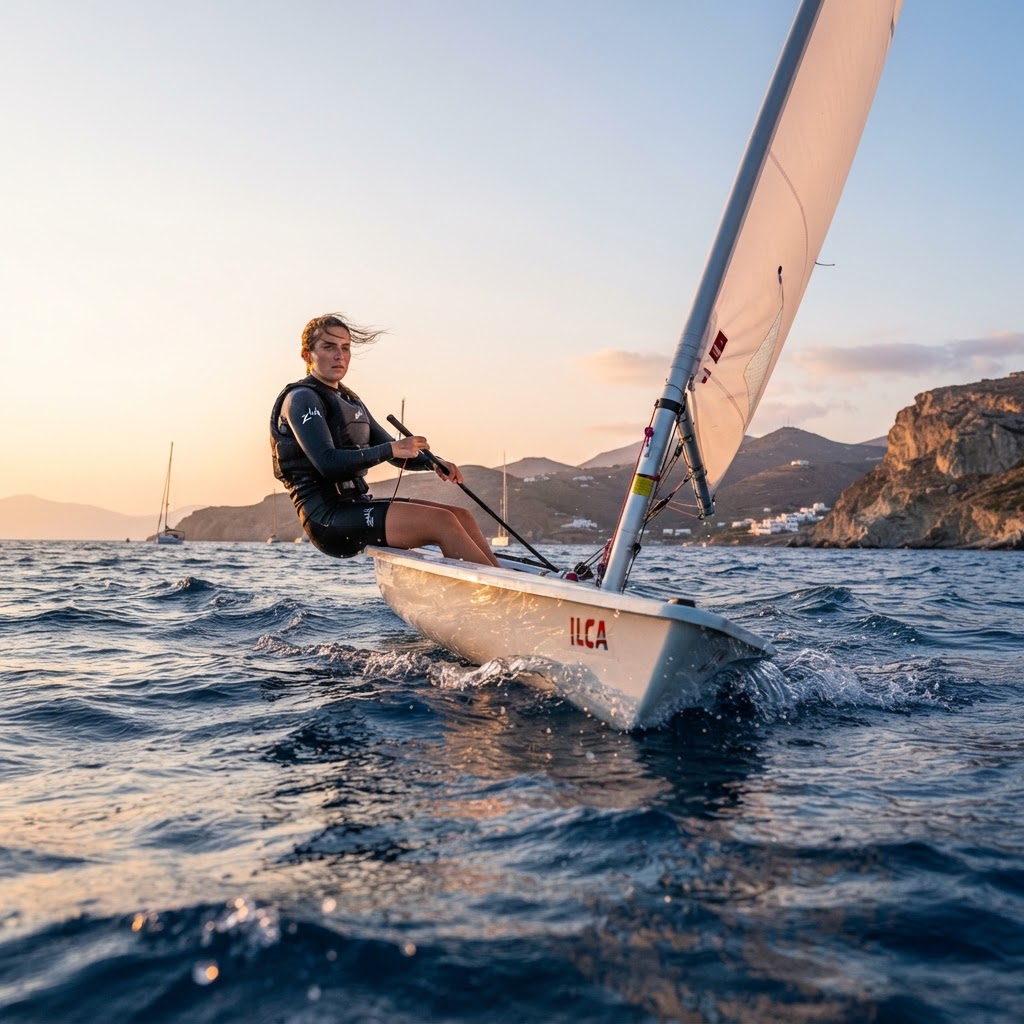
The Art of Downwind Sailing in an ILCA
Sailing an ILCA is one of the most exciting experiences an athlete can have. At the Nautical Club of Artemida Spata (NOAS), we are fortunate to utilize the ideal conditions of the South Euboean Gulf, where wind and swell create the perfect field for learning and perfecting downwind technique. Sailing 'downwind' is not just a process of moving from one point to another; it is an art that requires absolute coordination of the body, the boat, and the forces of nature.
Basic Boat Position and Balance
When sailing downwind, the central idea is to maintain water flow around the hull and maximize thrust from the sail. In an ILCA, whether you are using a 4, 6, or 7 rig, the goal remains the same: to keep the boat as 'flat' on the water as possible. A common trap for young athletes at NOAS is leaning too far back. While it intuitively seems correct, excessive stern submersion creates drag. Conversely, placing your weight slightly forward helps the boat 'surf' on the wave.
Managing Rigs: ILCA 4, 6, and 7
Choosing the right rig is crucial for downwind control. The ILCA 4, ideal for athletes taking their first steps, allows for a more forgiving stance. In the ILCA 6 and ILCA 7, the force exerted on the boat increases significantly. In strong wind conditions, the ability to 'depower' the sail with the boom vang is the key. At NOAS, our coaches place special emphasis on the correct adjustment of the vang so that the sail shape is maintained even when the boat rolls.
Taking Advantage of the South Euboean Swell
The South Euboean Gulf offers a unique swell that serves as an excellent school for our athletes. 'Surfing' on the wave is the essence of speed. To achieve the ideal surf, you must recognize the moment the wave approaches the stern. In that critical second, shifting your weight slightly forward and steering aggressively helps the ILCA accelerate. Continuous observation of the water behind the boat is an essential skill that we teach systematically in our Academy programs.
Settings for Speed: Vang, Cunningham, and Outhaul
For an ILCA to be fast downwind, settings must change dynamically according to wind strength. The vang must be tight enough so that the sail does not 'fold' at the top, but not so tight that the sail cannot 'breathe.' The Cunningham should be loosened to give depth to the sail, increasing the thrust area. At NOAS, we encourage our athletes to experiment with these settings during training so they understand the physics behind every tensioning of the line.
The Importance of Physical Condition
ILCA sailing is a demanding sport. Controlling the boat in challenging downwind conditions requires a strong core and good balance. Athletes who invest time in fitness see immediate results in their ability to keep the boat stable. At the NOAS Academy, on-water training is supplemented by cultivating the right competitive mindset.
Conclusions and Invitation
Downwind sailing in an ILCA is not just a matter of technique, but also of confidence. With the right guidance from experienced NOAS coaches, every athlete can turn a difficult course into an enjoyable high-speed experience. Whether you are an experienced sailor looking for improvement, or a new athlete wishing to join a vibrant community, our club in Artemida is the ideal destination.
We invite you to get to know our facilities up close and try the unique experience of sailing in the South Euboean Gulf. For more information regarding departments, equipment, and class schedules, you can contact the NOAS secretariat. We are here to guide you through every step of your sailing journey.