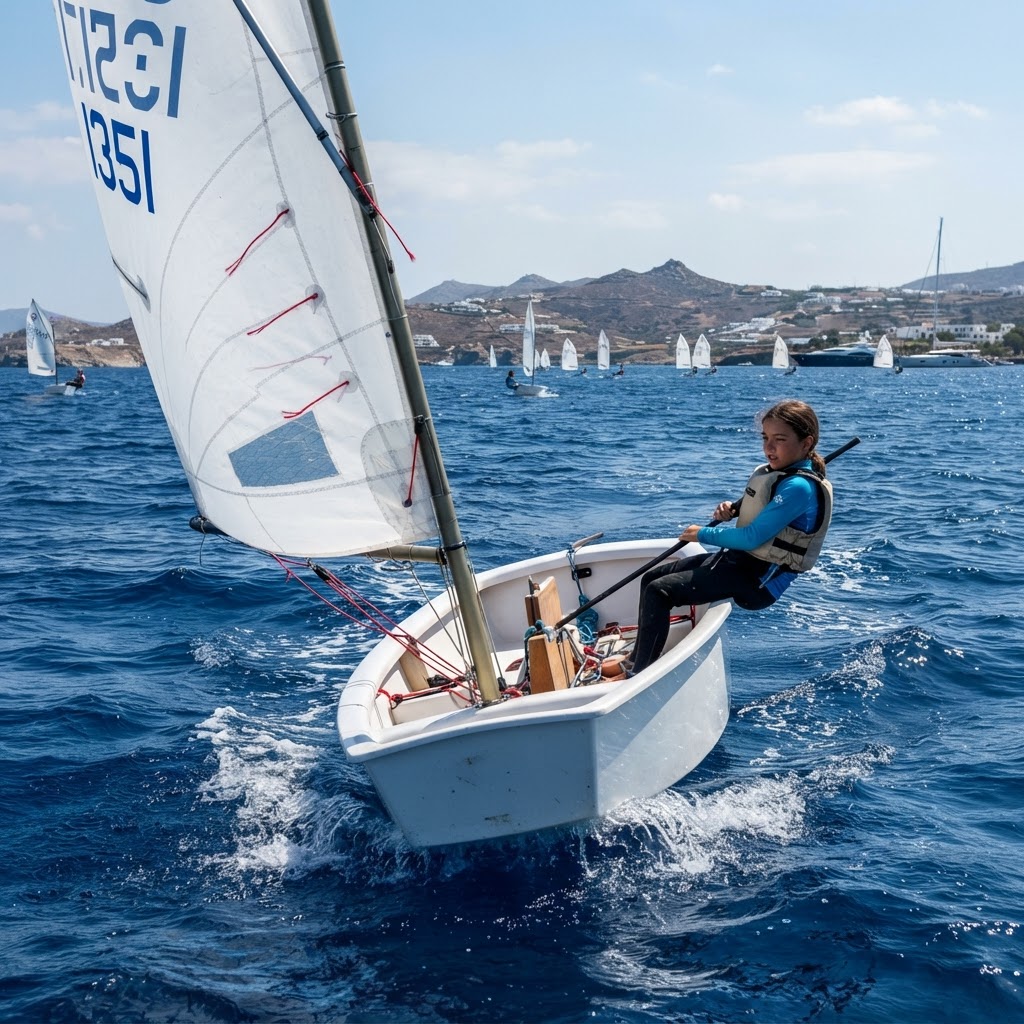
Understanding the First Beat: Mastering the Start
For any young sailor at the NOAS Sailing Club, the first beat of a race is often the most exhilarating and nerve-wracking part of the day. In the waters of the South Euboean Gulf, where the wind conditions can shift with local thermal patterns, mastering the first beat strategy is the difference between leading the pack and playing catch-up. This guide dives into the fundamental tactics that every Optimist and ILCA sailor should understand to optimize their performance.
The Anatomy of the Start Line
Success in the first beat begins long before the starting signal. It starts with reading the line and the wind. In the Artemis area, our sailors learn early that the wind often has a bias. Before the race, it is crucial to sail the line, identify which end is favored, and observe the wind shifts. If the wind is coming more from the pin end, you want to be there; if the committee boat end is favored, adjust your positioning accordingly. A smart start is not just about being first; it is about being in a position to leverage the incoming breeze.
Positioning and Lane Management
Once the start is underway, the priority shifts to lane management. As an Optimist sailor, your goal is to secure 'clear air'. If you are stuck in a cluster of boats, your speed will inevitably suffer due to the disturbed air from those ahead. Many of our young athletes at NOAS find that staying in a clear lane, even if it means tacking away early, is far superior to battling for position in a crowded pack. Consistency in boat speed is your best friend during these crucial first few minutes.
Reading the Wind Shifts
The South Euboean Gulf offers unique wind patterns. Learning to read these shifts—whether they are 'lifts' or 'headers'—is a skill that differentiates an average sailor from a competitive one. A lift allows you to point higher towards the windward mark, gaining ground efficiently. A header, conversely, forces you to tack. Understanding when to tack on a header is a core component of our training at the NOAS Sailing Club. It is about patience; sometimes, waiting for a slight shift is better than over-tacking and losing speed through the maneuver.
The Value of the "Clear Lane" Philosophy
Why is a clear lane so important for beginners? In sailing tactics for beginners, we emphasize that your ability to maintain speed is more important than your desire to sail the perfect straight line. If you are constantly maneuvering to avoid other sailors, you lose the flow. Aim for the open water on the side of the course that historically offers more pressure or better wind angles. Our coaches often remind the children that being the first to reach the "lay line" is not always the goal; being the fastest boat to the mark is.
Integrating Technique with Strategy
Strategy is useless without the technical ability to execute. This is why we focus heavily on boat tuning and sail trim. Before any race, ensure your sprit, outhaul, and vang are set correctly for the current wind speed. If your boat is not set up well, your tactical decisions won't translate into speed. We encourage our athletes to use the checklists provided by the club to ensure their boat is ready to handle whatever the Euboean waters throw at them that day.
Mental Preparation and Observation
Racing is as much psychological as it is physical. Before the start, observe other sailors. Are they struggling to hold their lanes? Is there a particular side of the course where the water looks darker (indicating more wind)? Use the time before the warning signal to visualize your path. A well-prepared mind leads to decisive action when the pressure is on. At NOAS, we believe that nurturing this analytical mindset is one of the greatest benefits of the sport.
Connecting with the NOAS Community
Being part of a sailing club is about more than just winning races; it is about being part of a community that loves the sea. Whether you are training in our Optimist academy or advancing to the ILCA category, the lessons you learn on the water will serve you for a lifetime. We welcome all families residing in the Artemis and Spata area to visit us, meet our coaches, and see the passion that drives our athletes. Sailing is a journey, and we would love for you to join us.
Join Us for a Trial
If you are interested in starting your child's sailing journey, reach out to our secretariat. We offer trial sessions for those curious about the sport. Let us show you how we blend technical skill, tactical thinking, and the pure joy of being on the water in the beautiful South Euboean Gulf.