Techno 293 Windsurfing Department
Speed and control riding the wind
The Techno 293 Windsurfing department of NOAS Sailing Club at Limeniskos Artemidas (East Attica, Greece): For children and teenagers who want to learn windsurfing in the most organised youth racing class.
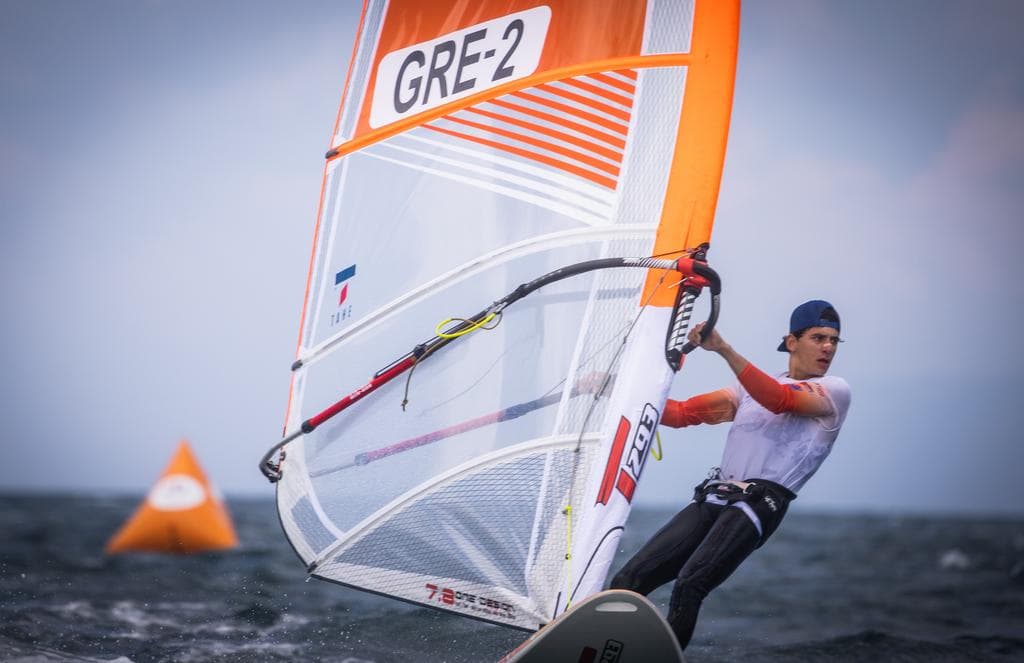
The sport
What is the Techno 293 Windsurfing?
The Techno 293 is the official international youth windsurfing class — a board designed specifically for young athletes, combining ease of learning with real racing performance. It is the stepping stone that leads all the way to the Olympic windsurfing classes.
Training starts with balance on the board and basic sail handling in light wind, and progresses to planing, fast turns and racing technique. Every stage takes place under supervision and with a support boat.
The windsurfing experience is unique: the athlete "stands" on the water and holds the wind in their hands. Speed, adrenaline and total contact with the elements — with safety and method.
At NOAS, the Techno 293 group has a strong competitive presence, with athletes earning distinctions at national and international level, and is an ideal path for children who love the sea and dynamic sport.
Training
What the athlete will learn
Balance on the board
A steady stance and body control on the water.
Windsurfing technique
Starting, points of sail, turns and planing.
Sail control
Boom handling and managing the wind's power.
Understanding the wind
Strength, direction and making use of gusts.
Safety rules
Independent return, signals and behaviour on the water.
Fitness
Strength, endurance and flexibility for the board.
Racing preparation
Course, starts and Techno 293 racing tactics.
For parents
Benefits for the child and the athlete
Self-confidence
The athlete learns to take initiative and trust their own abilities.
Focus
The sea and the wind demand attention and constant observation.
Decision-making
Every training session brings small decisions that build judgement and independence.
Fitness
A full-body workout in a natural environment.
Discipline
Organisation, consistency and respect for the schedule and the rules.
Social skills
A team atmosphere, friendships and cooperation in and out of the water.
Contact with nature
A daily relationship with the sea and the wind.
Sporting mindset
Healthy competition, respect for fellow athletes and the joy of effort.
Every child develops at their own pace — the above are areas in which regular participation in the sport can make a real contribution.
Schedule
Training sessions and levels
Level 1
Beginners' group
Balance, basic sail handling and first runs.
- Days
- Saturday & Sunday
- Hours
- 11:00 – 15:00
- Duration
- 2 hours
- Period
- September – July
- Places
- Limited places — by arrangement
- Coach
- Assigned by the Club
Level 2
Development group
Solid technique, stronger wind and planing.
- Days
- Saturday & Sunday
- Hours
- 11:00 – 15:00
- Duration
- 2 – 3 hours
- Period
- September – July
- Places
- Limited places — by arrangement
- Coach
- Assigned by the Club
Level 3
Pre-racing group
Racing technique and first participations.
- Days
- Weekends & afternoons
- Hours
- By arrangement with the coach
- Duration
- 3 hours
- Period
- September – July
- Places
- Limited places — by arrangement
- Coach
- Assigned by the Club
Level 4
Racing team
Full Techno 293 racing programme.
- Days
- Multiple sessions per week
- Hours
- By arrangement with the coach
- Duration
- 3 – 4 hours
- Period
- September – July
- Places
- Limited places — by arrangement
- Coach
- Assigned by the Club
The schedule may be adjusted according to the season and weather conditions. For currently available places, contact the Club.
Private & Adults
Private lessons & adult section
The department also offers private recreational lessons and an organised adult section — for every age and level, with no competitive commitment.
Safety & Equipment
Safe, at every training session
Safety
- All training sessions take place under the supervision of the Club's coaches.
- Wearing a life vest and appropriate equipment is mandatory for all athletes.
- Training sessions are accompanied by support boats and rescue equipment.
- Weather conditions are checked before every session.
- Training is adapted to each athlete's level and experience.
- When conditions are unsuitable, training is modified or postponed.
Equipment
- Provided by the Club
- Techno 293 board with an appropriately sized sail · Life vest · Support boats and rescue equipment
- What to bring
- Swimsuit or thermal clothing · Towel and a change of clothes · Sunscreen, hat and water
- For the trial lesson
- A swimsuit, a towel and an appetite for the sea — board, sail and life vest are provided
- Clothing by season
- Summer: swimsuit, rash guard, water shoes · Winter: wetsuit, windbreaker, gloves
- Personal equipment
- Not required to start. Racing-group athletes gradually acquire personal equipment in consultation with the coach.
Progression
The athlete's journey
1
Trial lesson
A first introduction to the sport and the Club.
2
Beginners' group
Basic technique, safety and familiarity with the sea.
3
Development group
Deepening technique and gradual independence.
4
Pre-racing preparation
Systematic training and first racing experiences.
5
Racing team
Participation in national and international regattas.
Competitive progression is optional. Every athlete can take part in training and enjoy the sport without necessarily having a racing goal.
The Club
Why choose NOAS
History & experience
NOAS has been cultivating water sports in Artemida and Spata with consistency and love for the sea.
Coaching philosophy
Gradual progression, respect for each athlete's pace and emphasis on solid technical foundations.
Safe environment
Well-organised training, support boats and a supportive atmosphere for children and parents.
Coaching team
Experienced coaches guiding every athlete from their first steps to the racing team.
Participation & distinctions
Club athletes compete and earn distinctions in national and international regattas.
Community
A living community of athletes, parents and friends of the sea.
Our sailing waters
Training takes place in the bay of Artemida (Loutsa), an area ideal for water sports.
Questions
Frequently asked questions
Is previous experience required?
No. The beginners' group is intended for those with no prior contact with windsurfing. Learning starts from the basics, in gradual steps.
Does the athlete need to know how to swim?
Yes, basic swimming ability and comfort in the water are required. Competitive-level swimming is not necessary.
At what age can they start?
Roughly from age 9. The Techno 293 class covers athletes up to 17 — there is then a transition to larger windsurfing classes. In every case, the final assessment is made together with the coach.
Is the necessary equipment provided?
Yes, the Club provides the basic sports equipment and life vests for training. Personal equipment is not needed to get started.
What should they bring to their first session?
A swimsuit or clothes that can get wet, a towel, a change of clothes, sunscreen, water and a hat. In the colder months, thermal clothing is recommended.
What happens in bad weather or strong wind?
Conditions are checked before every session. If they are unsuitable, training is adapted, moved ashore (theory, fitness) or postponed with timely notice.
Is there a trial lesson?
Yes. You can book a trial lesson through the expression-of-interest form on this page, so the athlete can experience the sport up close before enrolling.
Is participation in races mandatory?
No. The competitive path is optional. Many athletes take part in training for the experience, the exercise and the joy of the sport.
What is the cost?
Membership registration is €40 per year plus a €30 annual parent membership. Monthly lessons: beginner Optimist €70, pre-competitive Optimist €100, competitive Optimist €120, SUP €80 (or €15 per hour), Windsurfing €80 (or €50 per hour). Families with 2 or more athletes get 10% off lessons. For ILCA and private adult lessons, contact the secretariat (+30 22940 83930).
How is registration completed?
After the trial lesson, registration is completed through the Club's membership application and the required medical certificate. The office guides you through every step.
The next step
Get to know the department up close
Contact NOAS, find out about available places and schedule your first introduction to the sport.