Introduction to SUP and the importance of preparation
Stand Up Paddle (SUP) has won the hearts of thousands of people in recent years, and for good reason. It is the most direct way to get in touch with the sea, offering a unique combination of exercise, tranquility, and adventure. Here, in the crystal clear but sometimes demanding waters of the South Euboean Gulf in Artemida, the Artemida-Spata Nautical Club (NOAS) sees the public's love for the sport grow every day. However, like any activity in the aquatic element, SUP requires respect and proper preparation. Safety in SUP is not just a list of rules, but the way to ensure that every moment on the board remains a beautiful memory.
The importance of studying weather conditions
Before you even touch the board to the water, your first move should be to check the weather conditions. In the Artemida area, winds can present particularities, especially in the afternoon hours. It is imperative that you know the intensity and direction of the wind. An offshore wind can drift you far away without you even realizing it. We always check the forecast, and if you are a beginner, we avoid days with heavy swell. Safety in SUP starts with our ability to recognize our limits against the elements of nature.
Equipment as a safety ally
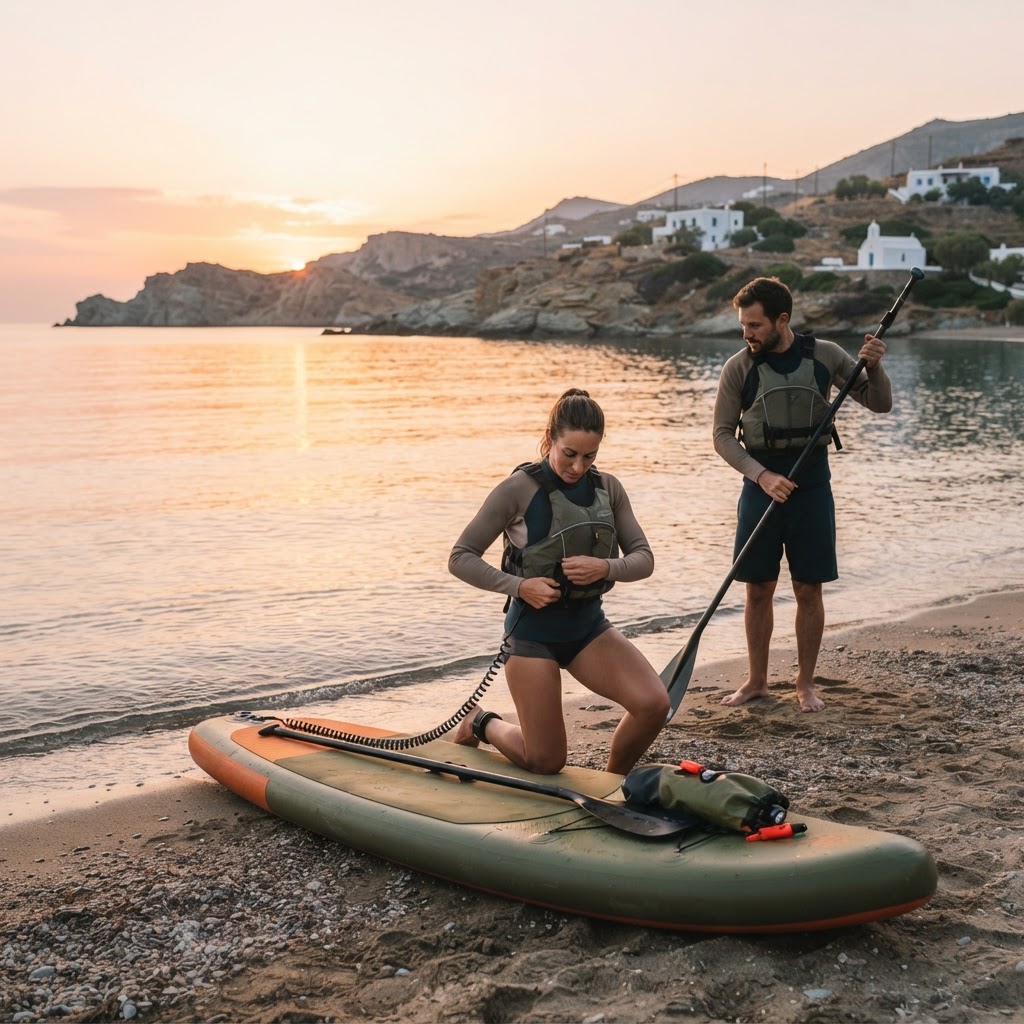
There can be no discussion about safety without a mention of equipment. The leash (the cord that connects your leg to the board) is your most important tool. In case of a fall, the leash ensures that your board, which also acts as a floating device, will remain by your side. Furthermore, the use of a Personal Flotation Device (PFD) is more than optional. Even for strong swimmers, a life jacket offers the possibility of rest and increased visibility in case of emergency. At the NOAS facilities, we place particular emphasis on the proper application of equipment, as comfort and safety go hand in hand.
The technique of falling and returning
Falling is part of the sport. The question is not if you will fall, but how you will fall and how you will get back on. Safety in SUP involves practicing falling away from the board to avoid injuries, and the proper technique for mounting. With the guidance of our instructors, you learn to feel comfortable with your balance, reducing anxiety and unnecessary movements that can exhaust you.
Presence and self-awareness
Never paddle alone if you do not have the proper experience. SUP is safer and more enjoyable in company. Additionally, it is essential to inform someone on the shore about the route you are going to take and your return time. Self-awareness plays a decisive role. Do not overestimate your strength. If you get tired or if conditions change suddenly, turn back to the shore in time. In the South Euboean Gulf, the marine landscape changes quickly and prudence is the paddler's best advisor.
Conclusions and participation in NOAS activities
Safety in SUP is a continuous learning process. Whether it is a recreational ride or intense training, knowing the rules saves lives and upgrades the quality of your experience. At NOAS, our academy focuses on comprehensive training, combining technical training with safe practice. If you want to delve into the world of SUP with a proper foundation, we invite you to come to our facilities in Artemida.
Come and meet us in person, learn our techniques, and feel the security that proper training offers. For any information regarding trial lessons or registration for our academy, the NOAS secretariat is at your disposal to guide you and answer every question you may have. The water awaits us, let's enjoy it responsibly!