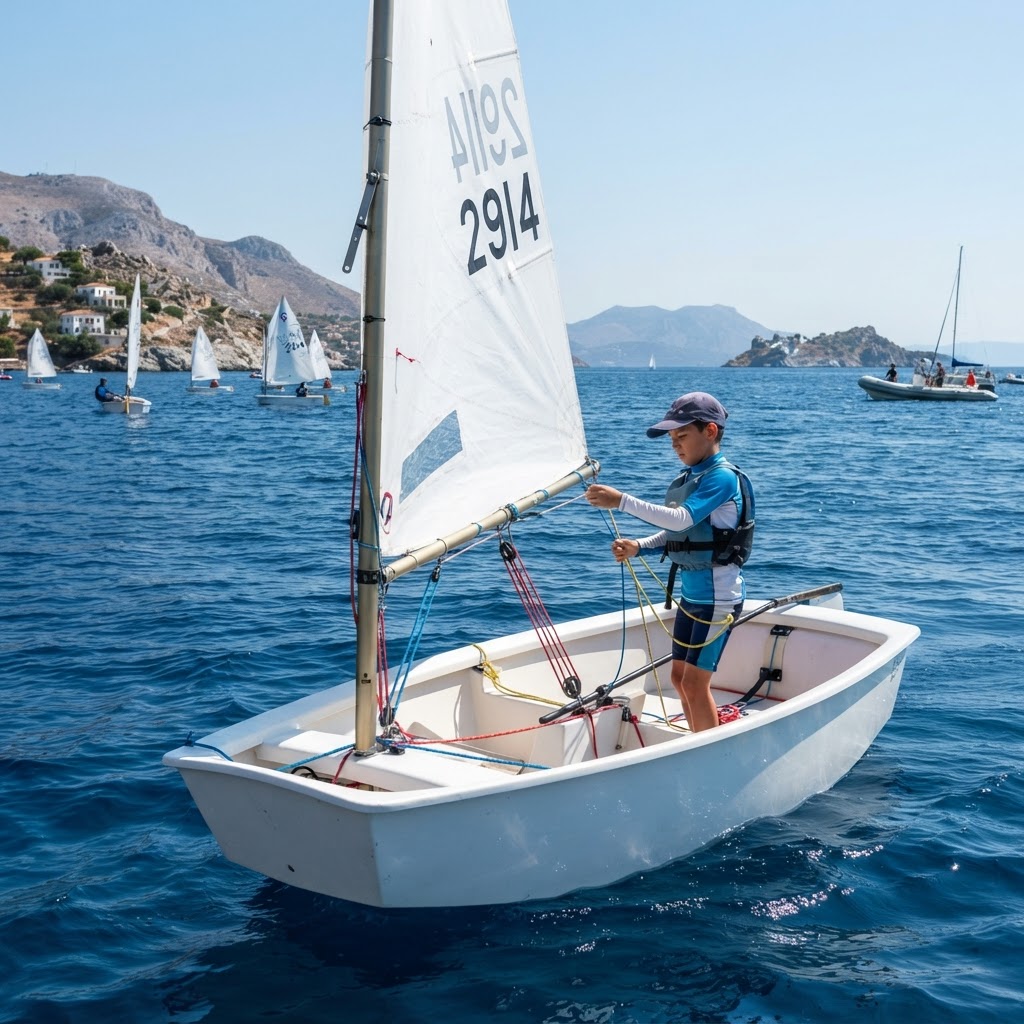
Introduction to Boat Tuning
In the world of competitive sailing, success is rarely a matter of luck. Whether you are racing an Optimist in the junior fleet or managing an ILCA transition, performance is born from a blend of technical skill, tactical awareness, and meticulous boat preparation. At the Nautical Club of Artemis-Spata (NOAS), we believe that racing begins long before the starting signal. Mastering your boat tuning is the hallmark of a sailor who takes their progression seriously. In this guide, we will walk through the essential checklist for race-day preparation, tailored to the unique conditions of the South Euboean Gulf.
The Philosophy of Racing Trim
Racing trim is not about finding a single 'perfect' setting, but rather about creating a setup that allows you to respond effectively to changing wind and wave conditions. In the South Euboean Gulf, where the breeze can shift from light and shifty to strong and choppy, your ability to adjust your controls on the fly is paramount. When we talk about boat tuning, we refer to the fine-tuning of the spars, the tension of the lines, and the overall shape of the sail. For Optimist sailors, this is the first step in understanding the physics of sailing. For ILCA sailors, it is a constant evolution of technique.
The Pre-Race Checklist: Spars and Rigging
Before you even touch the water, your rig must be inspected. A failure in the middle of a race is preventable. Check your mast, boom, and sprit for any cracks or bent fittings. Ensure all pins are secured with tape to prevent them from snagging your sail or catching on clothing.
- Mast Step and Rake: Ensure the mast is correctly positioned in the mast step. Rake—the angle at which the mast leans—significantly affects your weather helm. Too much rake can make the boat feel heavy; too little can make it sluggish.
- Sprit Tension: This is arguably the most important control on an Optimist. It defines the luff tension and the depth of your sail. On lighter days, you want a flatter sail to reduce drag, while in heavy air, you need more power and depth.
- Boom Height: Make sure your boom isn't hitting the deck or riding too high. The angle of the vang control starts with a proper boom setting.
Sail Shape and Trim
Your sail is your engine. Understanding how to use the outhaul, cunningham, and vang is essential for effective racing trim. The outhaul controls the depth of the lower part of the sail. In lighter winds, easing the outhaul allows the sail to fill with air. As the breeze builds, tightening it helps flatten the sail, allowing the boat to point higher and maintain speed.
At NOAS, our coaching staff emphasizes the importance of 'feel'. Try making small adjustments and observe how the boat reacts. Does it accelerate? Do you have to correct the rudder more often? Sailing is about constant feedback loops. If you want to dive deeper into these technical adjustments, check out our guide on [trim-paniou-optimist].
Safety and Organization
Never forget that boat tuning also includes the safety gear required by racing rules. Ensure your bailers are tied to the boat, your paddle is secured, and your painter line is in good condition. A cluttered boat is a slow boat. Everything must be in its place so you can focus on the wind and the competitors, not on your equipment.
The South Euboean Advantage
Training at the waters of Artemis gives our sailors a competitive edge. The variety of wind conditions here acts as an open-air laboratory. We encourage all our athletes, from our Optimist racers to our more advanced ILCA sailors, to use their training sessions as an opportunity to experiment with their tuning. If you are unsure where to start, our instructors are always available to help you understand the nuances of your specific rig.
Conclusion: Start Your Journey at NOAS
Proper boat tuning is a journey, not a destination. It requires patience, observation, and a willingness to learn. By keeping a checklist and being disciplined with your preparation, you gain confidence on the water, which in turn allows you to make better tactical decisions. Whether you are an aspiring champion or just starting your journey, the water at Artemis is the perfect place to hone your skills.
We invite you to visit our club, meet our team, and see firsthand how we approach racing. For those interested in joining our academy or seeking advice on equipment, please contact our secretariat. Let us help you set your sails for success.